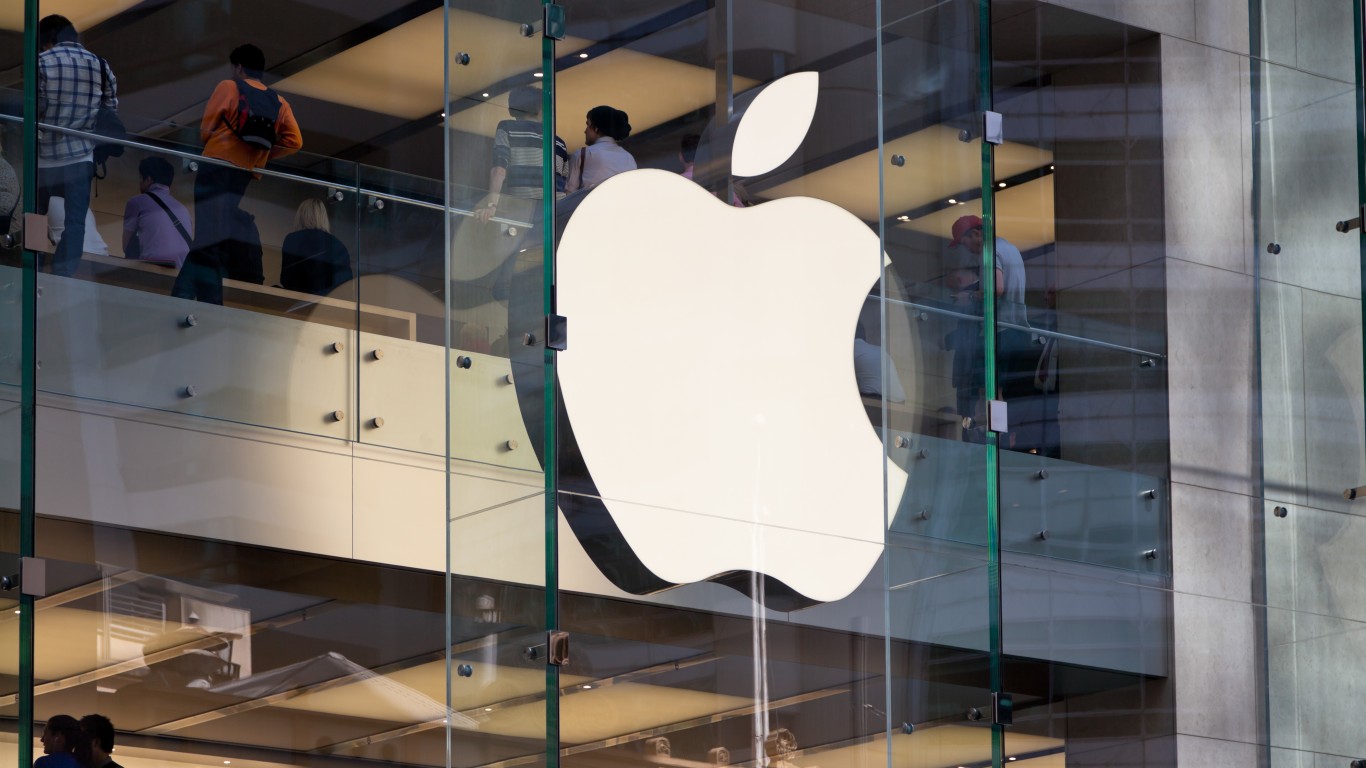
"Indeed, given the company's market capitalization of more than $4 trillion, the directional moves Apple makes over any time frame will likely impact most investors, whether they hold this stock directly or not. That's because most investors now have some sort of exposure to index funds or exchange traded funds (ETFs), many of which are market cap weighted. Thus, Apple's performance is a key indicator of the performance of the broader market."
"First, Apple's growth rate has slowed notably in recent years, and was actually negative in several quarters over this time frame. That's certainly disconcerting for investors who banked on this previously high-flying growth stock to continue. In the company's most recent quarter, both iPad and wearables sales growth were flat on a year-over-year basis. These trends reinforce the idea that saturated markets for iPhone upgrades and new product launches could lead to slower growth ahead."
Apple's market capitalization exceeds $4 trillion, so its directional moves can influence many investors, including those with index fund or ETF exposure. Apple has been a top-performing stock recently and could deliver strong returns into 2026 for long-term holders. Growth has slowed in recent years, with some quarters showing negative year-over-year results. Recent iPad and wearables sales were flat year over year, indicating saturated upgrade markets. Some AI investments risk margin dilution without clear monetization, and potential Capex strains could pressure the stock. At about 33-times forward earnings, Apple ranks among the more expensive Magnificent 7 growth stocks relative to its growth rate.
Read at 24/7 Wall St.
Unable to calculate read time
Collection
[
|
...
]