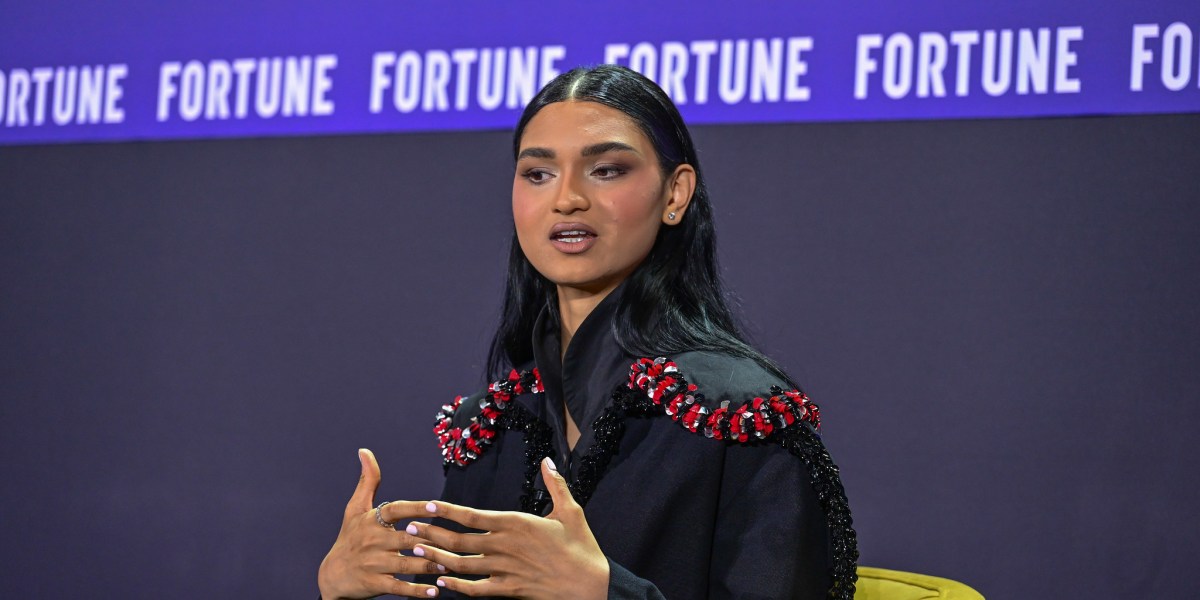
"For Kiara Nirghin, the 24-year-old co-founder and chief technology officer of the applied AI lab Chima, the narrative that her generation uses artificial intelligence as a cheat code is not just wrong-it ignores a fundamental shift in human cognition. The Stanford computer science alum and Peter Thiel fellow argued that while older generations view AI as a tool to be adopted, Gen Z views it as a native language."
"However, this fluency comes with a unique burden: the "AI anxiety" of keeping pace with technology that is currently the "worst" it will ever be. Speaking at Fortune Brainstorm AI in San Francisco, Nirghin addressed the tension between the perception of Gen Z and their reality as builders. "The truth is the younger generation isn't adopting AI," she said. "We're growing up fluent in AI.""
"This distinction is critical in the workplace. While a manager might see an employee using an AI agent as cutting corners, Nirghin said she sees a shift in the architecture of work itself. "We aren't thinking about coding from scratch," she explained. "We're thinking about coding with a coding agent side by side." Far from being generation shortcut, Gen Z are trailblazers, she argued."
Gen Z treats artificial intelligence as a native language rather than merely an adoptable tool. That fluency changes cognitive habits, workflows, and the architecture of work by positioning AI agents as collaborators rather than shortcuts. Coding, testing, applications, and problem solving increasingly assume side-by-side interaction with AI agents instead of building from scratch. Managers may misinterpret agent use as cutting corners while younger workers pioneer new use cases and applications. A pervasive "AI anxiety" emerges from pressure to keep up with technology that is currently imperfect yet destined to improve rapidly.
Read at Fortune
Unable to calculate read time
Collection
[
|
...
]