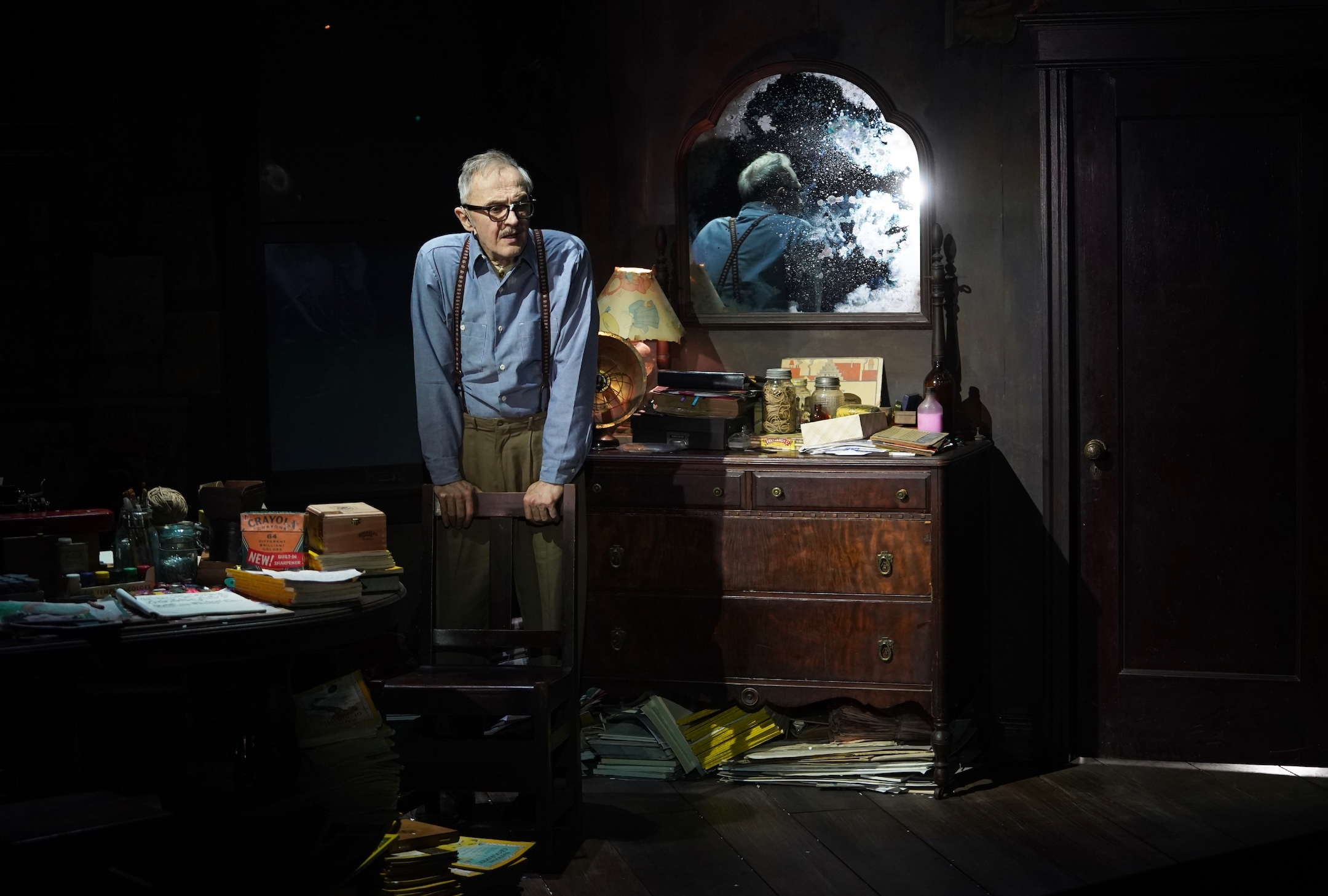
"Imagine the surprise that Henry Darger's landlords must have felt in 1972 when, in clearing out the cramped Chicago rooms where this reclusive menial worker had lived for decades, they discovered what he had left there: reams upon reams of writings-from an 15,000-page fantasy novel to an unfinished autobiography and a ten-year weather diary-as well as hundreds of watercolor illustrations in a bizarre and fascinating style, some as wide as ten feet across, many depicting young girls."
"Much of Darger's work remains shocking even today, when he has been posthumously celebrated as an outsider artist for more than half a century. Idiosyncratic and colorful, it is also often disturbing in its violence and nudity: a singular vision of apocalyptic kitsch, rather as though Heironymous Bosch were illustrating 1920s children's books."
"I was taken several times to be examined by a doctor who on the second time I came said my heart is not in the right place. We see how a newspaper photo of a murdered girl inspired a character in his magnum opus, The Story of the Vivian Girls, in What Is Known as the Realms of the Unreal."
Henry Darger, a reclusive Chicago menial worker, left behind an extraordinary artistic legacy discovered after his death in 1972. His prolific output included a 15,000-page fantasy novel, autobiography, weather diary, and hundreds of watercolor illustrations depicting bizarre and often disturbing scenes of violence and nudity. His work combines elements reminiscent of Hieronymus Bosch with 1920s children's book aesthetics, creating a singular vision of apocalyptic kitsch. John Kelly performs in a solo play adapted by Beth Henley from Darger's writings, exploring his troubled childhood spent in a home for feeble-minded children and how a newspaper photograph of a murdered girl inspired his magnum opus, The Story of the Vivian Girls.
Read at Time Out New York
Unable to calculate read time
Collection
[
|
...
]