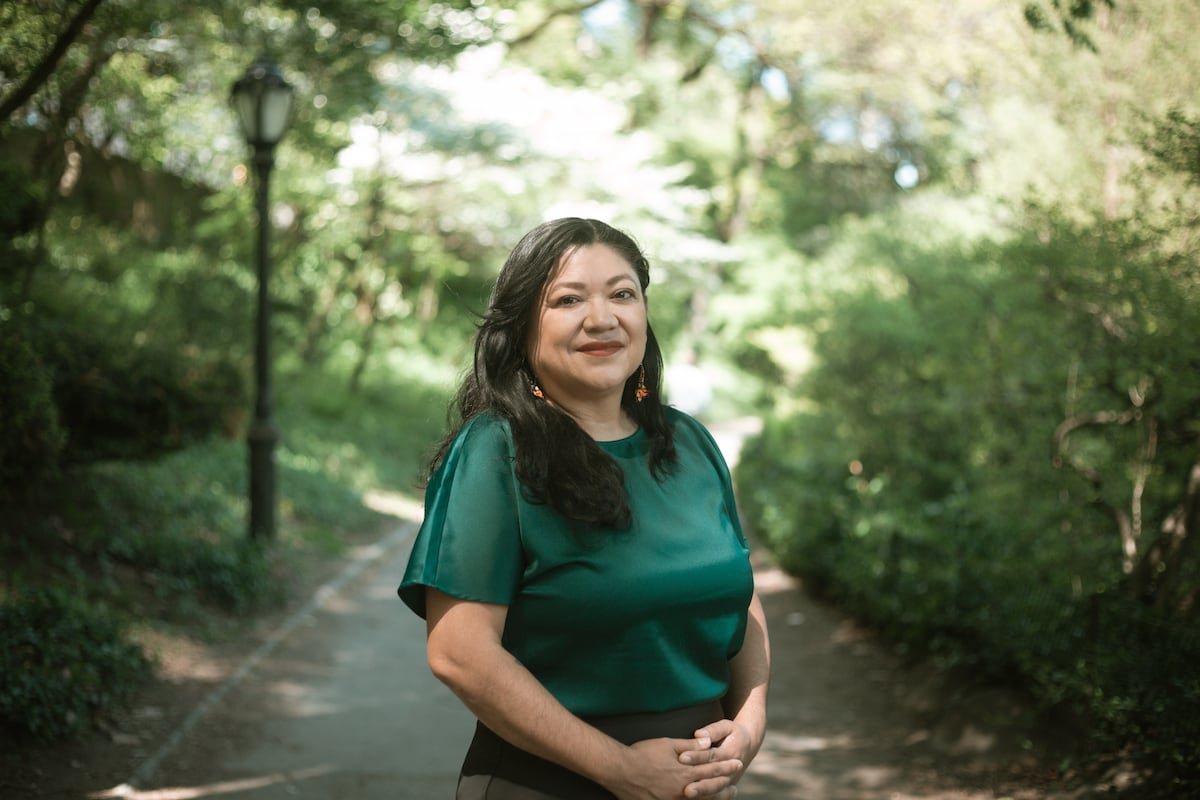
"At 50 years old and two decades after her first publication, every new book, whether fiction or non-fiction, has been permeated by her experiences as a Mexican immigrant who, at nine years old, left behind poverty in Iguala, Guerrero, for a difficult adolescence of assimilation in California. There, she reintegrated into a broken family marked by her father's alcoholism and abuse."
"From poking at the wound so much, Grande began to fear that she had developed a fixation and, at the same time, commodified her trauma. I had to ask, how have I wrapped my whole identity around my trauma? Have I tied my creativity to my trauma? In that every time I write, that's all that comes out of me."
"I really wanted to interrogate where my fixation with my trauma comes from and how it has impacted me on a personal level but also professionally, Grande explains, in an attempt to describe Migrant Heart (2026, Atria Books), her latest book published this week simultaneously in Spanish (Penguin Random House) and English. At once a continuation of her work and a break from it, the book is a collection of 18 personal essays, where she again looks at her most intimate experiences, but now shares measured reflections alongside the narration of events."
"I wanted to see what I could do to start to walk back from that... How can I retrain my mind so that it's not just constantly replaying the trauma in my head, but where I can now start looking at my experiences and focusing more on the positive things of those experiences, on the joy of those experiences? And so I was doing it for my mental health and also professionally. I want to start writing differently, explains the author."
Reyna Grande’s literary career is shaped by experiences of Mexican immigration, poverty, assimilation in California, and a broken family marked by alcoholism and abuse. She questioned whether her identity and creativity had become tied to trauma, and whether that focus had become a fixation or a commodification of pain. Her latest book, Migrant Heart, published in Spanish and English, presents 18 personal essays that revisit intimate experiences while adding more measured reflection. Grande also experiments with new forms, using texts structured like a play, a dictionary, or an almanac. The work aims to retrain attention away from constant replay of trauma toward joy and healthier writing.
Read at english.elpais.com
Unable to calculate read time
Collection
[
|
...
]