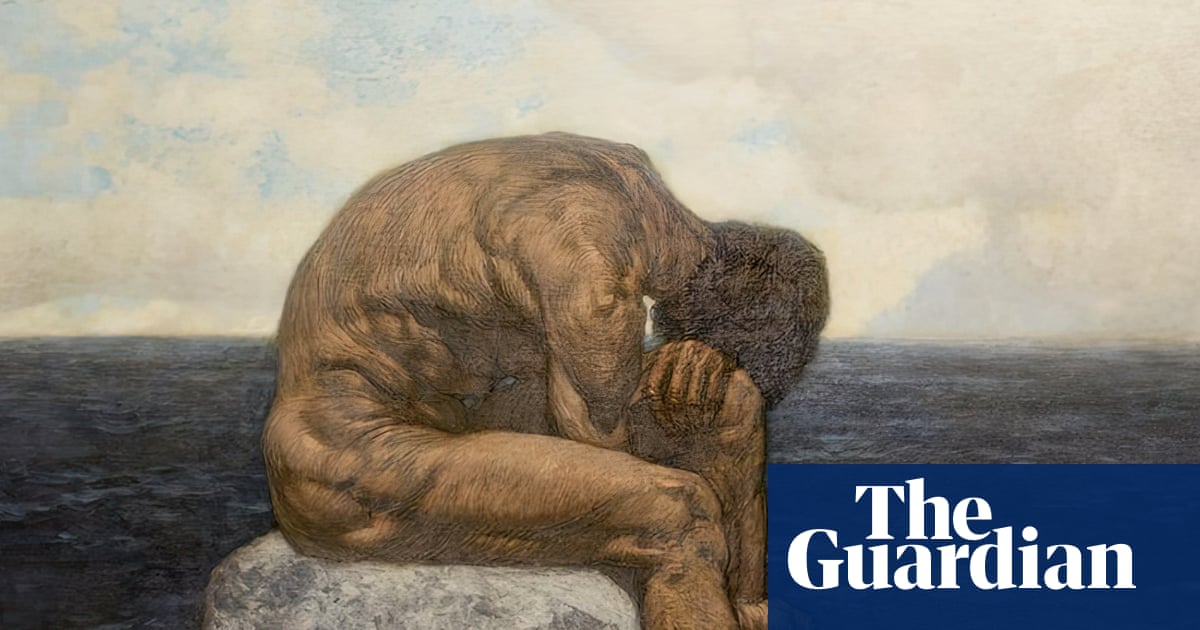
"Following some of the arguments in Ernest Becker's 1973 study The Denial of Death, he proposes that such crises are at least partly the result of the western reluctance to face mortality. In Britain, we eschew open coffins, for instance. When our relatives die, as my mother did two years ago, they die in a hospital rather than at home. We can hardly even bring ourselves to say die, preferring euphemisms such as pass away."
"In this Instagram age, our lives are dominated by filters and distractions. The crisis strikes when reality can't be held at bay any longer. We lose our parents. Then we notice, inevitably, that we are now at the front of the queue. Carl Jung had a breakdown in his late 30s, then decided that such an ordeal was a necessary descent to the underworld'"
Midlife crises can result from a cultural reluctance to face mortality, visible in euphemisms, preference for hospital deaths, and avoidance of open coffins. Constant distractions and filtered online lives allow reality to be postponed until loss forces confrontation. The death of a parent often signals that one has reached the front of the queue. Psychological breakdowns can function as deliberate descents into one’s underworld, a low point that enables reassessment. The recurring myth of the hero’s descent frames such ordeals as pivotal, leading to transformation and resolution. Embracing the crisis as a heroic passage can yield renewed purpose and deepened wisdom.
Read at www.theguardian.com
Unable to calculate read time
Collection
[
|
...
]