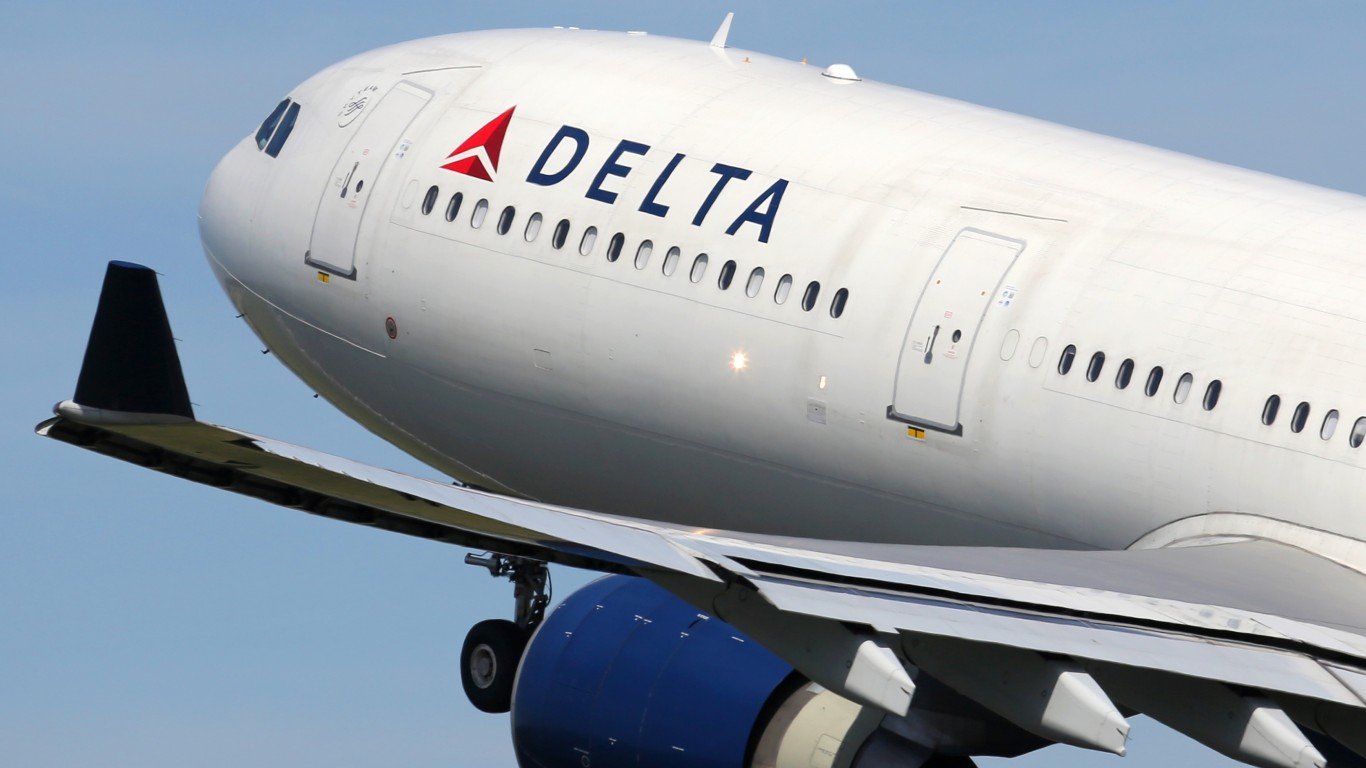
"Citi's core argument is structural: higher fuel prices are already priced into airline stocks with the least fuel exposure, and Delta has among the least sensitivity to higher fuel prices of any major airline. Even as jet fuel prices have risen roughly 50% from the January average and Q1 fuel cost estimates have been raised approximately 14%, Delta's diversified revenue base and fleet efficiency insulate margins in ways competitors cannot match."
"Premium products revenue reached $5.70 billion in Q4 2025, up 9% year-over-year, while American Express remuneration grew 11% to $8.2 billion for full-year 2025. Diversified revenue streams now represent 60% of total revenue, reducing airline cycle risk."
"Delta's full-year 2025 adjusted fuel expense fell 7% year-over-year, with fuel price per gallon down 10%. New wide-body aircraft deliver 25% better fuel efficiency over replaced aircraft, reflecting improved cost efficiency."
Delta Air Lines faces near-term headwinds with shares down significantly over recent periods, but Citi projects substantial recovery potential with an $87 price target by end of 2026. The investment thesis rests on Delta's structural advantages: the airline has among the lowest fuel price sensitivity in the industry, with full-year 2025 adjusted fuel expenses down 7% year-over-year despite rising jet fuel prices. Premium revenue streams, including American Express remuneration, grew substantially and now represent 60% of total revenue, reducing cyclical airline risk. Management guidance projects 20% EPS growth for 2026 with free cash flow between $3-4 billion, supported by fleet efficiency improvements delivering 25% better fuel efficiency on new wide-body aircraft.
#delta-air-lines-stock-analysis #airline-fuel-cost-efficiency #premium-revenue-growth #eps-guidance-2026 #investment-thesis
Read at 24/7 Wall St.
Unable to calculate read time
Collection
[
|
...
]