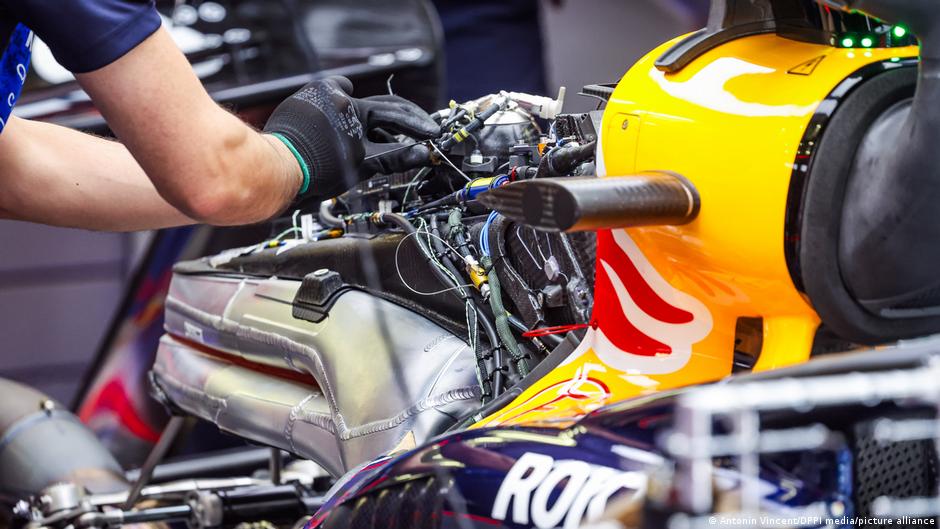
"The cars are shorter, narrower and lighter, but perhaps most decisively now 50% of the power comes from the battery rather than from the combustion engine. The aerodynamics are also different, and instead of the usual DRS, drivers have a "boost" button that allows them to unlock more power during the race."
"The front and rear wings can be adjusted by the driver during the race from "corner mode" where there is more downforce in the corners, to "straight mode" where there is less drag on the straights. All these adjustments have significantly changed the aerodynamics of the car."
"It means drivers must work together with their race engineers to continuously manage energy. Drivers collect energy when braking, when they lift their foot off the gas (lift and coast), or when they shift down to a lower gear in corners (engine braking). A single charge is not sufficient for an entire race."
Formula 1 has implemented major technical changes for the 2026 season, fundamentally altering car design and power delivery. Cars are now shorter, narrower, and lighter, with tires becoming slimmer and underbodies changed from curved to flat. The most significant modification involves the powertrain: the 1.6-liter V6 turbo engine now provides only 50% of power, with batteries supplying the remaining 50%, compared to the previous 80:20 split. Drivers can adjust front and rear wings between corner mode and straight mode during races. A new boost button replaces DRS, allowing drivers to unlock additional power. These changes require continuous energy management between drivers and engineers, as batteries charge during braking and deceleration but cannot sustain full throttle for entire laps. Driver reception has been mixed, with some expressing significant concerns about the new battery-dependent system.
#formula-1-2026-regulations #hybrid-powertrain-technology #vehicle-aerodynamics #energy-management #racing-innovation
Read at www.dw.com
Unable to calculate read time
Collection
[
|
...
]