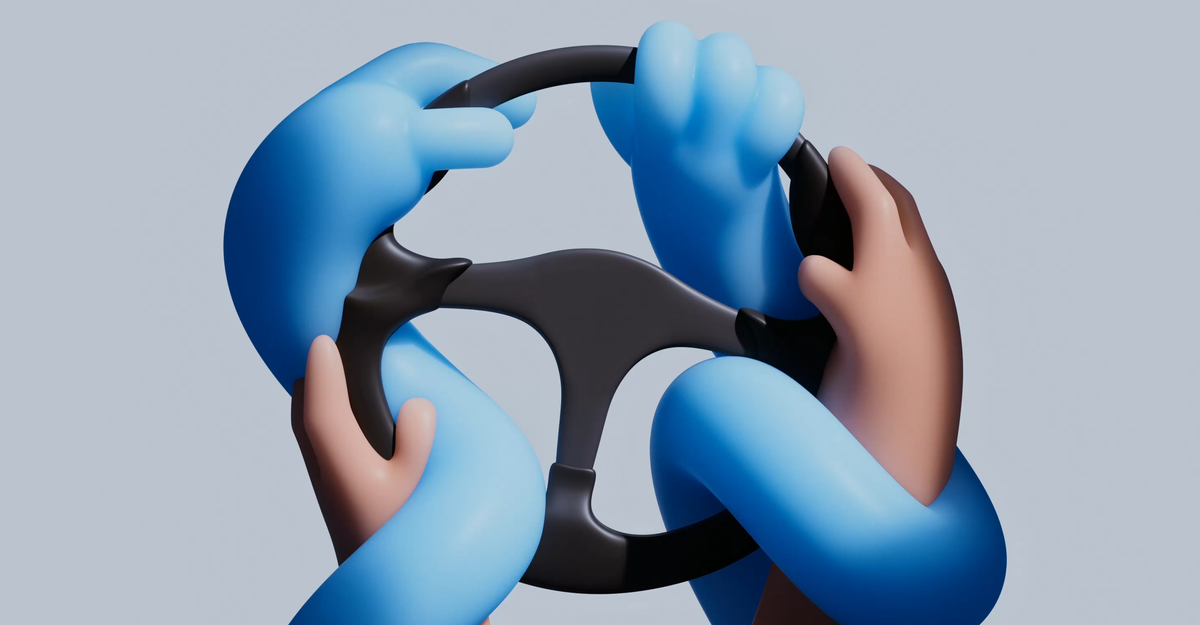
"The Tesla was in Full Self-Driving mode, driving perfectly-until it wasn't. The car was making a turn. Something felt off-the steering wheel jerked one way, then the other, and the car decelerated in a way I didn't expect. I turned the wheel to take over. I don't know exactly what the system was doing, or why. I only know that somewhere in those seconds, we ended up colliding with a wall."
"You might think I'd have known what to do in this situation. I used to run the self-driving-car division at Uber, trying to build a future in which technology protects us from accidents. I had thought about edge cases, failure modes, the brittleness hiding behind smooth performance. My team trained human drivers on when and how to intervene if a self-driving car made a mistake."
"With my own Tesla, I started out using Full Self-Driving as the default setting only on highways. That's where it makes sense: You have clear lane markers and predictable traffic patterns. Then, one day, I tried it on a local road, and it worked well enough to become a habit."
During a routine residential drive in the Bay Area, a Tesla Model X operating in Full Self-Driving mode experienced a critical failure while making a turn. The steering wheel jerked unexpectedly, the car decelerated abnormally, and when the driver attempted to take control, the vehicle collided with a concrete wall. Safety systems including the seat belt, crumple zone, and airbag functioned properly, preventing fatal injuries. The driver sustained a concussion, stiff neck, and headaches. The driver, formerly head of Uber's self-driving division, had gradually expanded use of Full Self-Driving from highways to local roads despite understanding the technology's limitations and failure modes.
#autonomous-vehicle-safety #full-self-driving-failure #human-machine-interaction #edge-cases-in-automation #vehicle-crash-experience
Read at The Atlantic
Unable to calculate read time
Collection
[
|
...
]