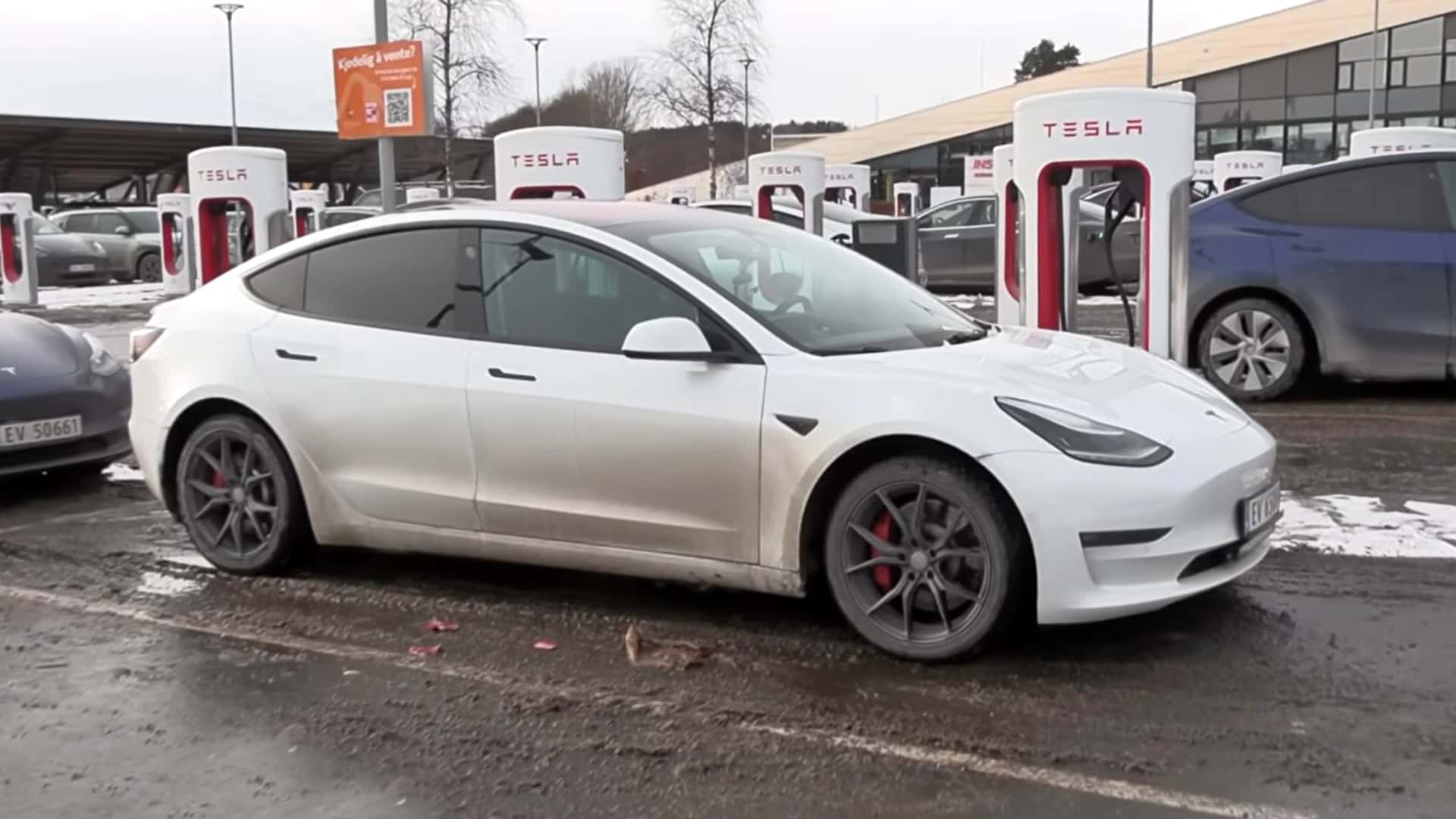
"Bjorn Nyland's old 2019 Model 3 now shows ~21% loss at 182,000 km (113,000 miles)higher than expected. He blames early fast-charging, but notes that the BMS may lowball capacity if it never sees a battery that is frequently full or near-empty. Even with the loss, he expects around 400 km (248 miles) of summer range and half that in winterstill usable."
"Battery degradation is one of the biggest fears when buying a used EV, but actual capacity loss varies widely depending on many factors. If an EV lived its life in a cold climate, covered a lot of miles, and was frequently fast-charged, then its battery will show it. This seems to be the case with this 2019 Tesla Model 3 Performance, which reports a higher than expected capacity loss."
"This old Tesla belonged to Bjrn Nyland, who sold it in 2021 with around 49,000 miles (80,000 km), and he measured the degradation at the time at roughly 8%. While he had the car, he fast-charged it frequently because it had free Supercharging, and he attributes the fairly high capacity loss at the time of sale to his charging habits."
A 2019 Tesla Model 3 with 182,000 km (113,090 miles) shows approximately 20.8% battery capacity loss, leaving about 58 kWh usable and a roughly 4.4 kWh buffer. The same car measured about 8% degradation at 80,000 km (49,000 miles) in 2021 after frequent free Supercharging. Early frequent fast-charging, extensive mileage, and continuous life in a cold Norwegian climate likely accelerated degradation. The battery management system can underreport capacity if it never sees true full or empty states. Despite the loss, expected summer range is about 400 km and winter range roughly half that.
Read at insideevs.com
Unable to calculate read time
Collection
[
|
...
]