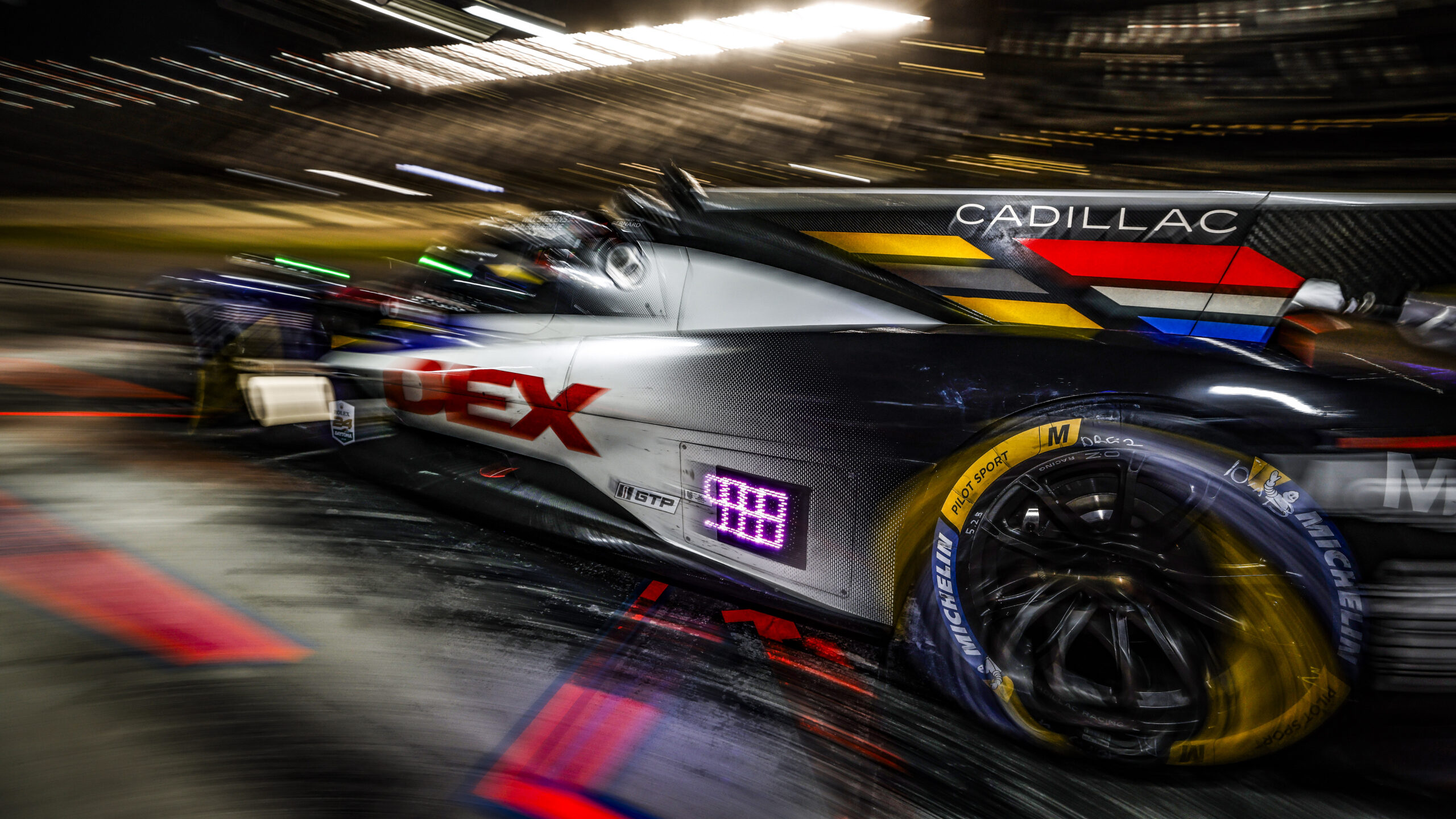
"A large number of automotive technologies or safety features that we mostly take for granted today made their way into road cars from the race track. Seatbelts, rear view mirrors, turbocharged engines, aerodynamics, direct-injection engines, dual-clutch gearboxes, and more owe their existence to competition. Although, truth be told, direct examples of racing technology transfer in the mid-21st century seem less common than the intangible benefits gained when a bunch of motorsports-trained engineers have lunch every day with their road car colleagues."
"Vast amounts of data are generated during the course of a race-each of the 11 GTP cars that raced at Daytona collects 1,600 different channels of data from onboard sensors, with nearly as many on the GTD machines that are based on road-going cars like Porsche's 911 or Chevrolet's Corvette. With 60 cars running for 24 hours-and that's just the first race of the year-that's a heck of a lot of high-quality data being generated,"
Daytona hosted the annual 24-hour endurance race featuring hybrid GTP prototypes and GTD machines derived from road cars. Racing environments generate massive telemetry: each GTP car records 1,600 data channels and 60 cars running 24 hours produce enormous high-quality datasets. IMSA created IMSA Labs to leverage that telemetry to help automotive and technology companies develop improved simulation tools. Racing has historically transferred safety and performance technologies—seatbelts, mirrors, turbocharging, aerodynamics, direct injection, dual-clutch gearboxes—to road cars. IMSA also signed a partnership with NASA to collaborate on telemetry and diagnostics.
Read at Ars Technica
Unable to calculate read time
Collection
[
|
...
]