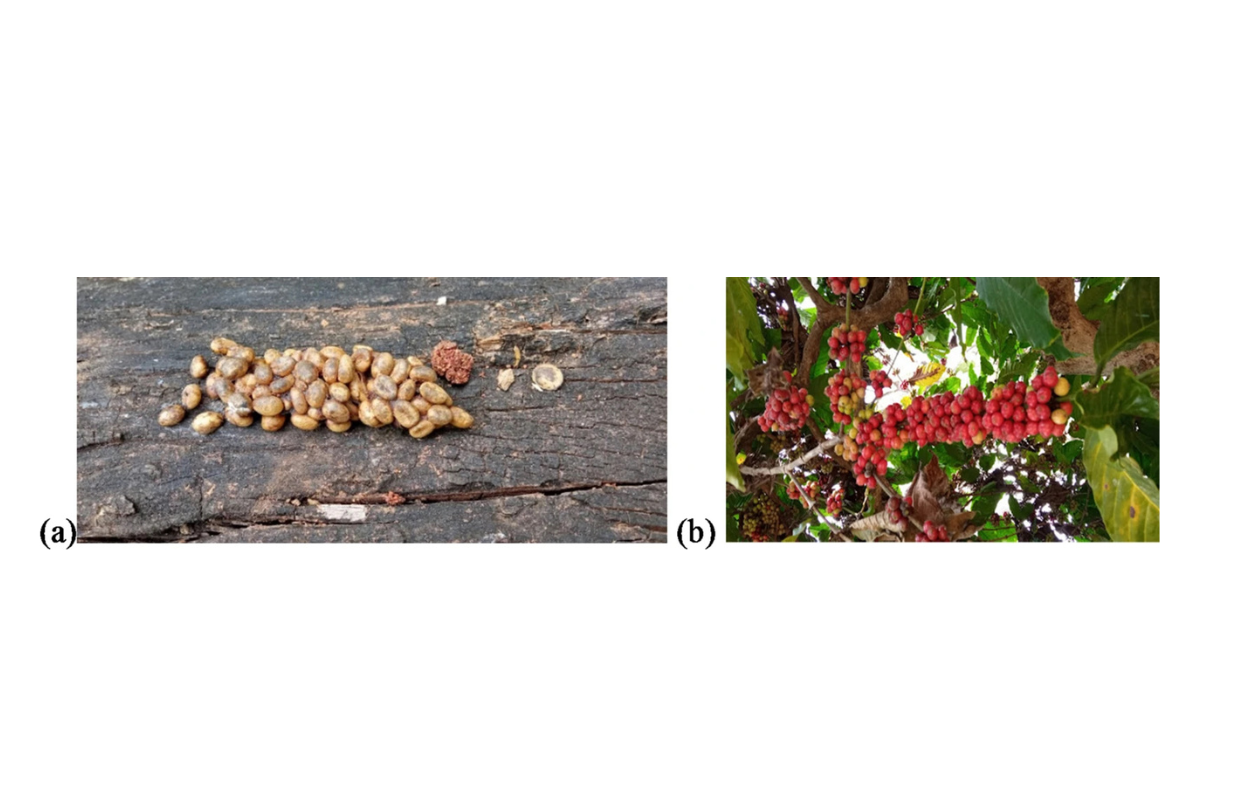
"Civet-processed beans showed higher total fat and higher levels of two fatty-acid methyl esters associated with flavor and aroma in other foods, although the authors also wrote that civet and non-civet beans were 'not very distinct' when multiple measurements were considered together."
"The authors described those as 'flavoring and aroma agents' that can impart 'a dairy or milk-like aroma and flavor' in food applications."
"'These observations go with the hypothesis that the civet's digestive process, comprising natural fermentation along with the enzymatic uptake, modifies the beans' chemical composition, intensifying the flavour and adding to the distinctive sensory characteristics of civet coffee.'"
Researchers analyzed unroasted robusta coffee beans from civet droppings and compared them to beans from ripe cherries. Civet-processed beans had higher total fat and specific fatty-acid methyl esters linked to flavor. However, the overall differences between civet and non-civet beans were minimal. The study highlighted two compounds, caprylic acid methyl ester and capric acid methyl ester, which contribute to a dairy-like aroma. The findings suggest that the civet's digestive process alters the beans' chemical composition, enhancing flavor and sensory characteristics.
Read at Daily Coffee News by Roast Magazine
Unable to calculate read time
Collection
[
|
...
]