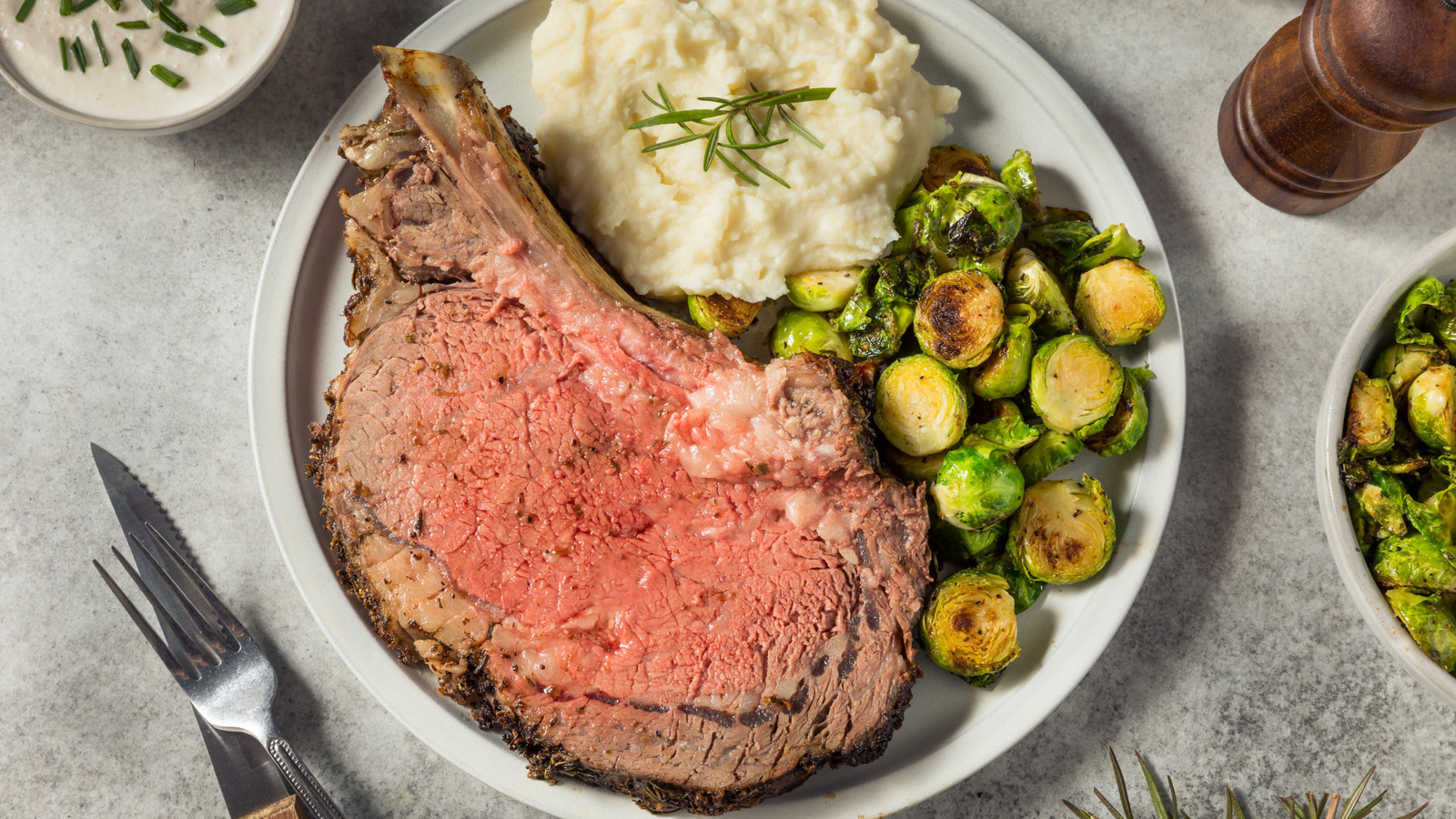
"Long after the last forkful, there are still ways for a prime rib's savory richness to continue blessing your kitchen. Leftover meat gets shredded into tacos and instant ramen, drippings become au jus and gravy, and the bones? That's your secret to a deeply flavorful beef stock. Discarded far too often, their hidden richness goes to waste in the bottom of the trashcan, when really, it should already be simmering on the stovetop, giving all your future soups and stews the most hearty base imaginable."
"The initial roast already seeps intricate seasonings, flavorings, and rendered fats into the bones, crafting a built-in depth that regular soup bones simply do not have. Through a slow simmer, those nuances are released into the water along with all the collagen and marrow, resulting in a richly layered stock that can be as intense or light as you want it to be."
"Start by boiling the bones with a mirepoix. Add salt and pepper, but only moderately since the bones are already quite flavorful. After about 10 minutes, lower it to a simmer for at least two hours. Once the stock has cooled to room temperature, strain away the bones and veggies, and store it in the fridge for up to one week."
Prime rib bones and drippings provide a rich, seasoned foundation for homemade beef stock. The roast infuses bones with rendered fats, seasonings, and marrow that release during a slow simmer to yield layered, collagen-rich broth. To make stock, boil bones with a mirepoix, season moderately, then simmer for at least two hours (or overnight for deeper flavor). After cooling, strain out solids and refrigerate up to one week or freeze for three to five months. The resulting stock can serve as a pronounced standalone base or blend subtly into soups, stews, sauces, and other dishes.
Read at Tasting Table
Unable to calculate read time
Collection
[
|
...
]