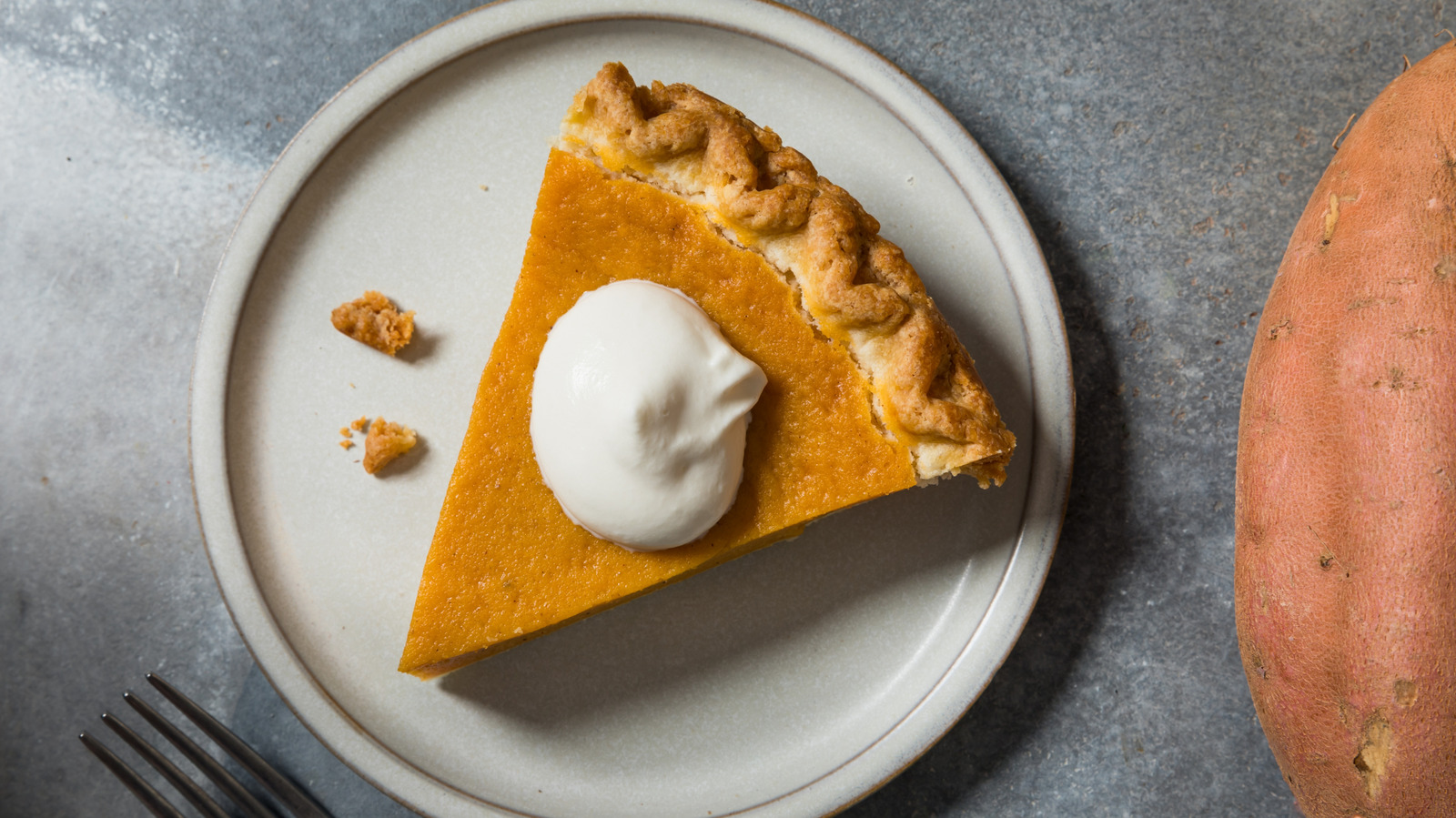
"Sweet potato pie filling is creamy and custardy, just like the filling of pumpkin pie. When unbaked, the wet filling can make a raw pie crust soggy. This can happen after you freeze an unbaked pie. George tells us, "The filling is usually raw eggs, dairy, and starches, which would lead to a strange texture when thawed and a very soggy crust." Once cooked, however, the filling solidifies into a custard."
"To ensure the crust and filling are in the best possible shape, the best option is to bake the pie completely, cool it fully, and then freeze it," she states. This goes for the pie crust as well. "While unbaked pie crust on its own freezes well, it only lasts about two months before we start to see some grayish discoloration from oxidation. So, baked pie crust is the best option."
"You can't throw that pie into the freezer all willy-nilly, you need to properly prepare it first. "Fully bake the pie," George explains. "After the pie has cooled, wrap it tightly in plastic wrap to prevent condensation or freezer burn." While freezer burned food might not make you sick, it does mean your food has lost moisture.George recommends freezing the sweet potato pie for no longer than two months. While properly stored and frozen food remains safe to eat, its quality declines over time."
Sweet potato pie freezes well when properly prepared. Unbaked wet filling can make a raw pie crust soggy and produce an off texture after thawing. Baking the pie fully causes the filling to solidify into a custard and preserves texture. Baked pie crust is preferable because unbaked crust can develop grayish discoloration from oxidation after about two months. Wrap cooled, baked pies tightly in plastic to prevent condensation and freezer burn. Freeze for no longer than two months for best quality, and thaw slowly in the refrigerator before serving.
Read at Tasting Table
Unable to calculate read time
Collection
[
|
...
]