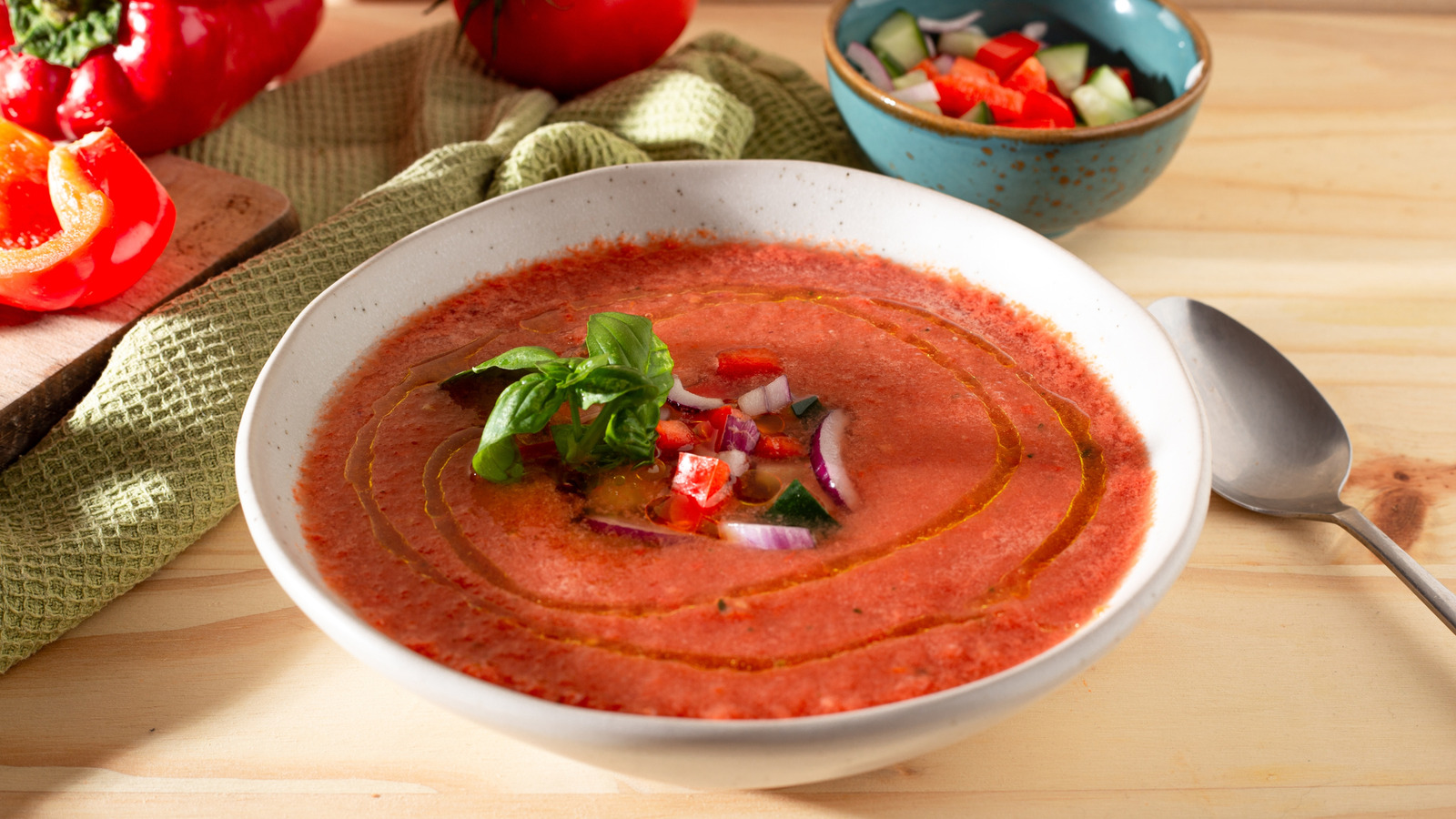
"In this blended Hearty Red Pepper Soup recipe, by the time the veg, aromatics, and broth have softened and been puréed, the soup is technically "done," but it can still taste a little thin or sharp. Cooked down red peppers impart a balanced sweetness and acidity, with a slight undertone of earthy, vegetal bitterness, and blending amplifies those edges. What the soup needs at that point isn't more cooking, but a change in viscosity."
"Full-fat coconut milk thickens a soup not by starch or reduction, but with a high fat content and suspended solids. When stirred in at the end, it increases body, smooths out acidity, and gives the soup a more even, luxurious mouthfeel without turning it greasy. Compared to heavy cream, coconut milk holds its own in vegetable-forward, slightly acidic soups like red pepper. Cream can curdle as it warms, while aromatic coconut milk brings substantive, rich sweetness that "goes" with the flavors of the vegetables."
Blended red pepper soup can taste thin or sharp after pureeing because blending amplifies the peppers' sweetness, acidity, and slight vegetal bitterness. Full-fat coconut milk adds fat and suspended solids that increase viscosity and body without relying on starch or reduction. Stirring coconut milk in off direct heat smooths acidity and produces a silky, luxurious mouthfeel without greasiness. Coconut milk performs better than heavy cream in slightly acidic vegetable soups because cream can curdle as it warms. Prolonged vigorous heat can cause coconut milk to separate, lose silkiness, and dull its flavor.
Read at Tasting Table
Unable to calculate read time
Collection
[
|
...
]