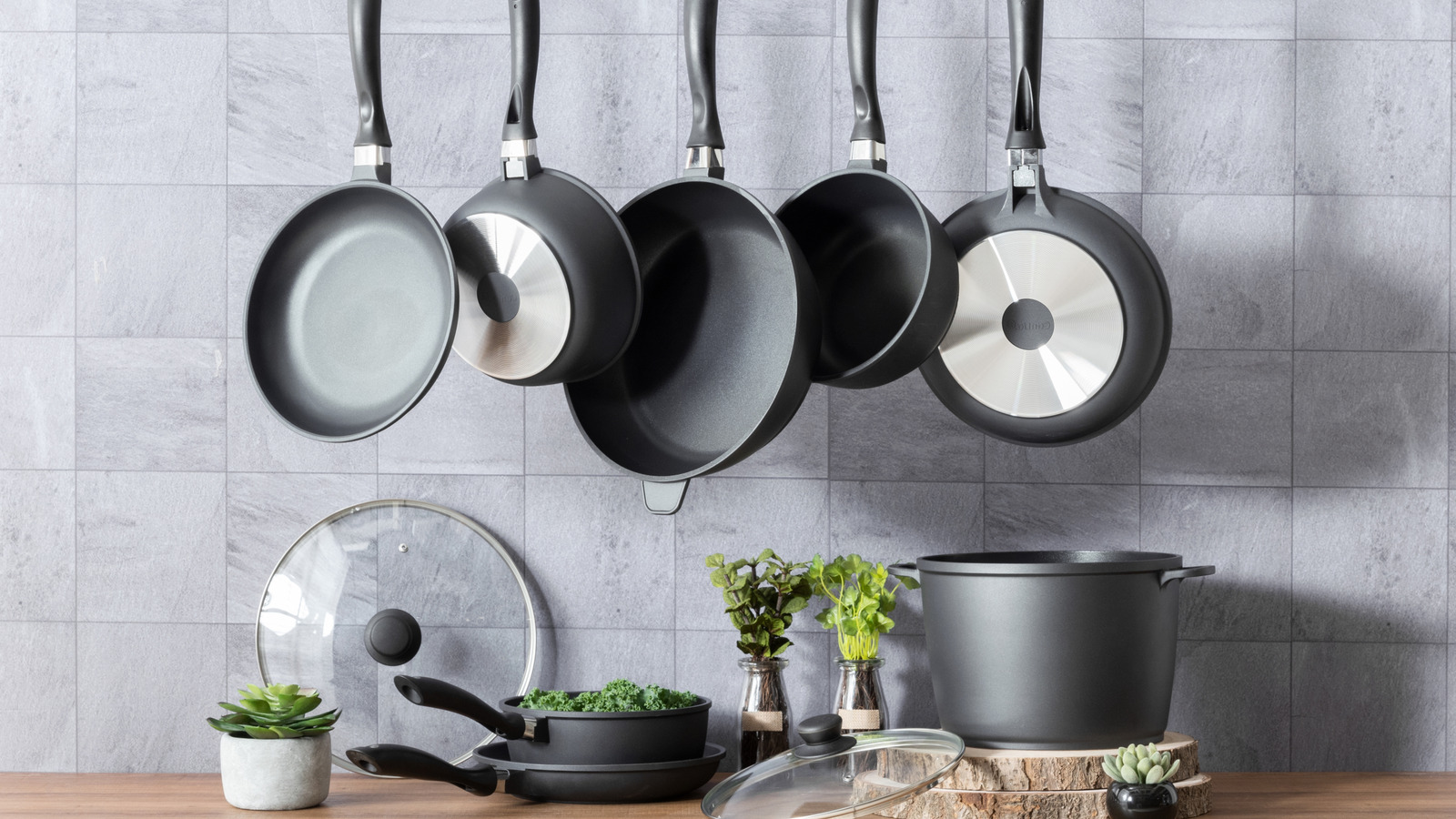
"You want the right size, you want something durable, and you want something that cooks evenly and safely. The quality of our pots, pans, and tools makes such an impact on the food we eat at home, we wanted to round up the biggest red flags to watch out for when shopping for cookware. Trained chef and restaurateur Fred Decker noted that when it comes to pans in particular, you'll want to avoid what may seem like just another design approach: handles attached with rivets."
"Over time as you fill, lift, and hang the pan, the rivets are able to wear away at the aluminum and loosen. Once this happens, it's difficult to stop or fix the issue. You can try lightly hitting rivets in with a hammer, but this won't be a lasting solution. The best way to avoid loosening handles - which can lead to messy and even dangerous drops if they break mid-use - is to consider a pan's material or avoid rivets altogether."
Handles attached with rivets on thinner pans can loosen over time as rivets wear into lightweight materials. Aluminum and some copper or carbon-steel pans can be thinner than rivets, allowing rivets to abrade the pan body during normal use. Loosening rivets are difficult to permanently repair; light hammering may provide only a temporary fix. Loose handles can cause messy or dangerous drops if they fail mid-use. Choosing pans with welded handles or selecting heavier, thicker materials reduces the risk of rivet wear and improves long-term handle security.
Read at Tasting Table
Unable to calculate read time
Collection
[
|
...
]