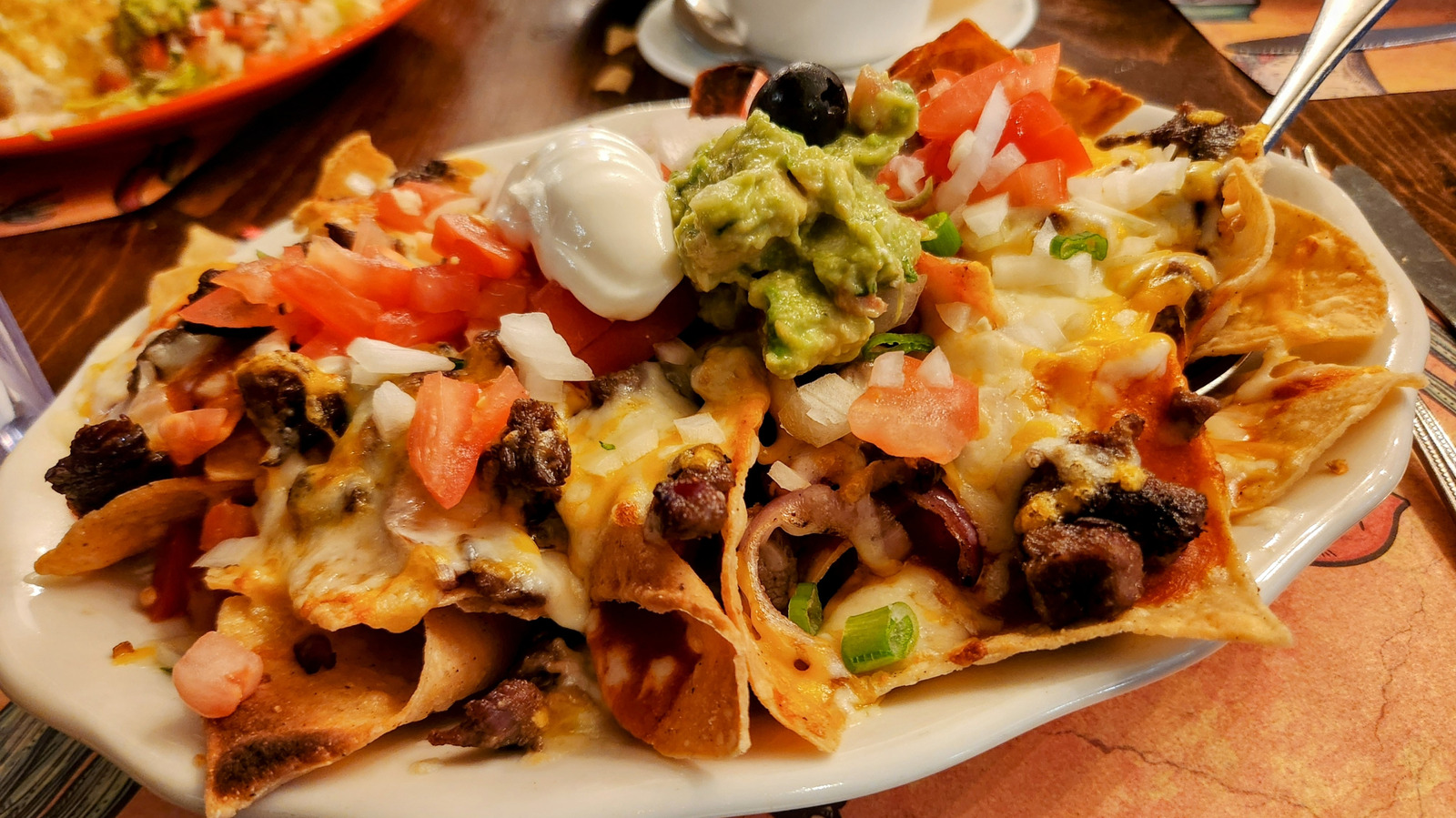
"Nachos are a dish as delicious to eat as they are easy to make. All you have to do is pile your favorite ingredients on a layer of crisp tortilla chips and heat them until the cheese is melty and delicious. In fact, the hardest part of the whole process might be getting the proportions right. With a meal this good, you don't want to accidentally serve up too little, but nachos are undoubtedly one of those leftovers that just don't reheat well."
"The base of an ideal plate of nachos relies on a delicate balance of crunchy tortilla chips and melted cheese. Fresh out of the oven, these textures complement one another perfectly. The next day, however, the cheese may have turned dry and grainy, and the moisture from all of the toppings has likely infiltrated the tortilla chips, leaving them limp and insipid."
"But leftover nachos suffer from more than just textural issues. The other problem is that they often feature a variety of toppings, some of which are meant to be warm, and others cold. The chips, cheese, and beans should all be piping hot, but guacamole, sour cream, and salsa are meant to be served cool. This is easy enough to do when the nachos are assembled fresh, but it is another challenge when preparing leftovers."
Nachos combine crisp tortilla chips and melted cheese for optimal texture and flavor. Leftover nachos quickly lose that balance as cheese can become dry and grainy while toppings' moisture makes chips limp. Many nachos include both hot elements (chips, cheese, beans) and cold elements (guacamole, sour cream, salsa), creating reheating challenges. Eating nachos immediately preserves texture. If reheating is necessary, scrape off cold toppings like guacamole, pico de gallo, and lettuce before reheating; salsa may be damaged by reheating. Reheating methods should focus on restoring crispness and heat to chips, cheese, and warm toppings.
Read at Tasting Table
Unable to calculate read time
Collection
[
|
...
]