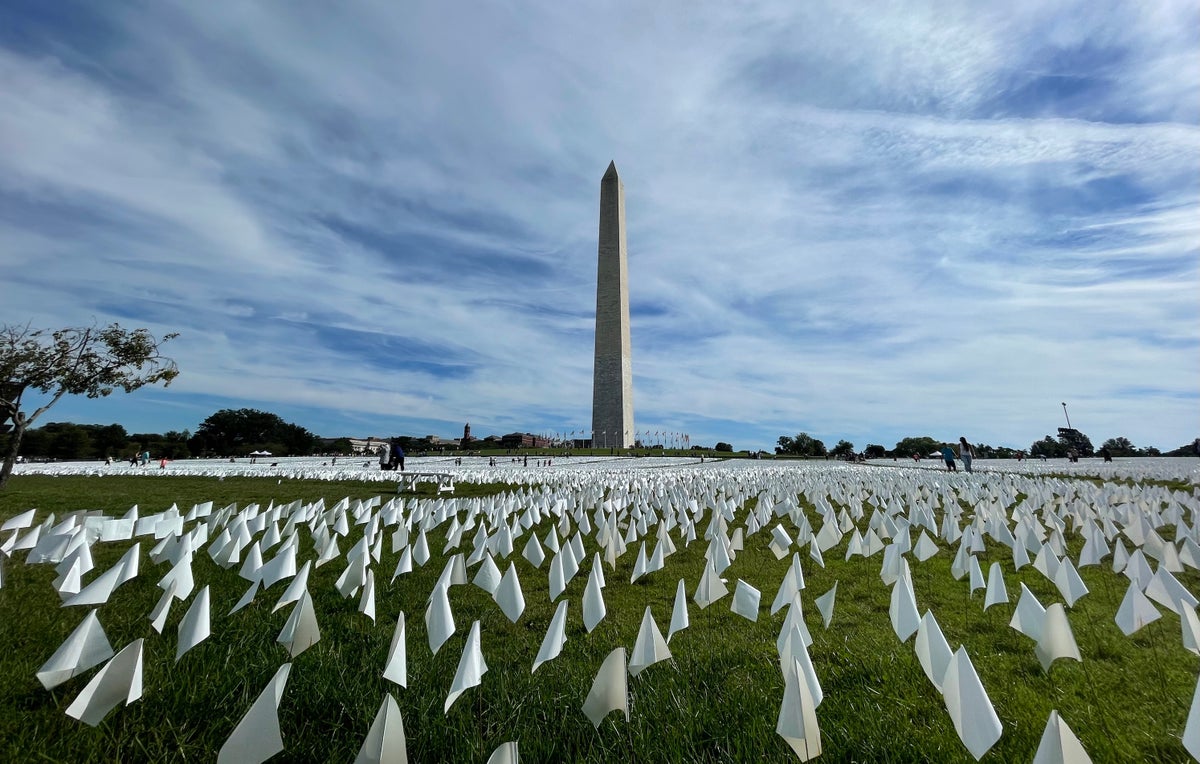
"COVID may have killed significantly more people in the U.S. in the first two years of the pandemic than official records indicate, with as many as one overlooked death for every five recorded ones. That brings the total to nearly one million deaths just in 2020 and 2021. That calculation comes from research published today in Science Advances that seeks to understand how many COVID deaths fell through the cracks of official reporting systems."
"The untallied cases show the burden of the pandemic in the U.S. fell most heavily on marginalized people. These vulnerable groups are just taking a higher risk at every step, and the accumulation of all of that is this disparity in COVID mortality at the end, says Mathew Kiang, an epidemiologist at Stanford University and a co-author of the study."
"All told, the algorithm identified between about 150,000 and 160,000 potential unrecognized COVID deaths on top of the 840,251 that were officially reported. Those numbers suggest that for every five recognized COVID deaths, there may be one additional unrecorded death, indicating significant undercounting in official pandemic mortality statistics."
Research published in Science Advances reveals that official COVID-19 death counts in the United States significantly underestimate pandemic mortality. Using machine-learning algorithms to analyze CDC records from March 2020 through December 2021, researchers identified between 150,000 and 160,000 potential unrecognized COVID deaths beyond the 840,251 officially reported deaths. This suggests approximately one overlooked death for every five recorded deaths, bringing the total to nearly one million for 2020-2021. The study demonstrates that unrecorded deaths disproportionately affected marginalized and vulnerable populations who faced compounded risks throughout the pandemic, resulting in greater mortality disparities among these groups.
#covid-19-mortality-undercount #pandemic-disparities #marginalized-populations #machine-learning-epidemiology #public-health-surveillance
Read at www.scientificamerican.com
Unable to calculate read time
Collection
[
|
...
]