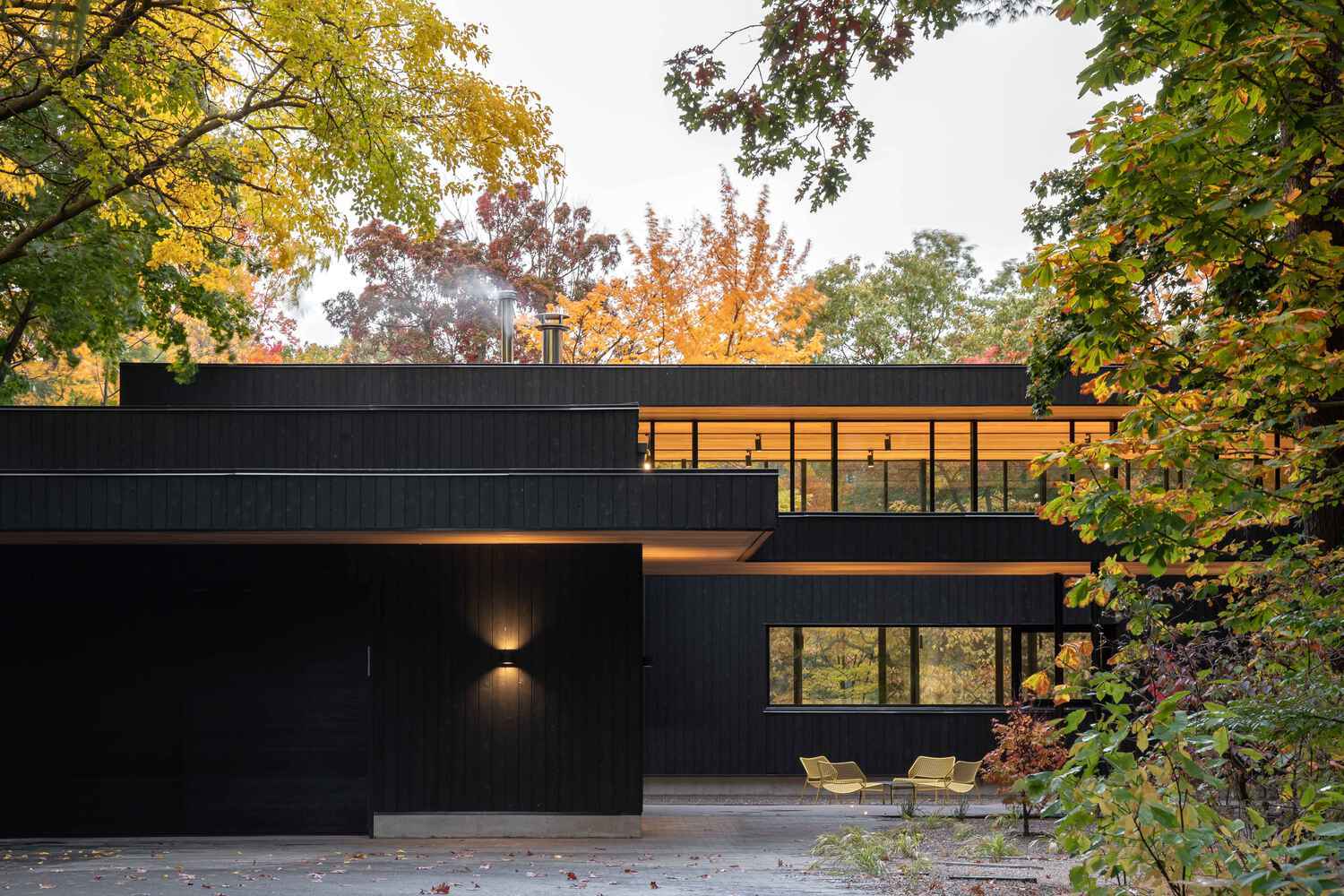
"Shou Sugi Ban is a traditional Japanese technique for wood preservation that involves charring the surface of timber to create a protective layer. While its origins are rooted in practical durability, the method has been widely adapted into the modern built environment and shapes a unique and distinctive aesthetic. It is a material of contradiction: it remains bold in its visual language due to its dark tones, yet it simultaneously borrows from and complements its natural surroundings, allowing houses to settle quietly into their sites."
"The charred finish among the 22 residences featured here across Canada and the United States serves as a common thread for navigating extreme climates. From humid lakefronts to dense forests, the carbonized skin acts as a resilient shield against diverse conditions. Beyond mere protection, these houses demonstrate how the material's texture changes with exposure to light, transforming from a flat matte in the shade to a silver-flecked, shimmering surface in direct sun."
Shou Sugi Ban involves charring timber surfaces to form a protective, carbonized layer that enhances durability. The technique has been adapted into contemporary architecture to produce a distinctive, dark aesthetic that both contrasts with and complements natural sites. Charred cladding performs across diverse climates, offering resilience from humid lakefronts to dense forests. The material’s surface qualities evolve with light exposure, shifting from a flat matte in shade to a silver-flecked shimmer in direct sun. Dark cladding can delineate architectural volumes, create monolithic silhouettes, and emphasize voids such as recessed entryways and sheltered terraces.
Read at ArchDaily
Unable to calculate read time
Collection
[
|
...
]