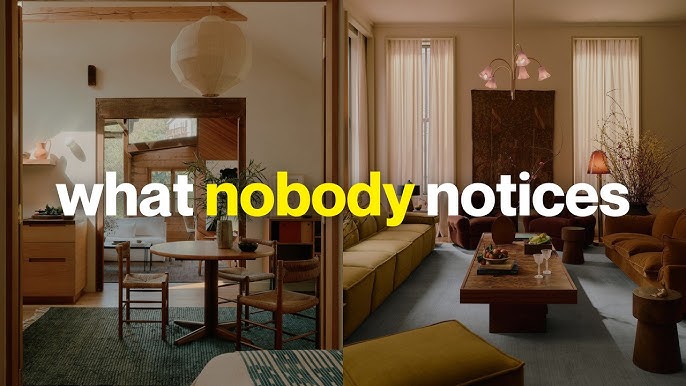
"Interior design remains an overlooked art, with few appreciating its similarities to more serious forms of human endeavor. Our eyes read a room like a paragraph, sensing if something's wrong or too right."
"A common amateur mistake is to arrange rooms so that everything lives on one single horizontal band. This flattens the space, preventing the eye from traveling upward or into the corners."
"Placing visual interest at varying altitudes creates a more complex visual path, convincing the brain it is in a more expansive space. Mounting curtain rods above the window frame enhances this effect."
Interior design is frequently undervalued despite its artistic significance. Many people fail to recognize its parallels with other serious art forms. A common mistake in design is arranging furniture on a single horizontal plane, which flattens the visual experience. To enhance spatial perception, varying the height of visual elements and using vertical lines can create a more dynamic and expansive environment. Proper placement of items encourages the eye to explore the space, leading to a richer aesthetic experience.
Read at Open Culture
Unable to calculate read time
Collection
[
|
...
]