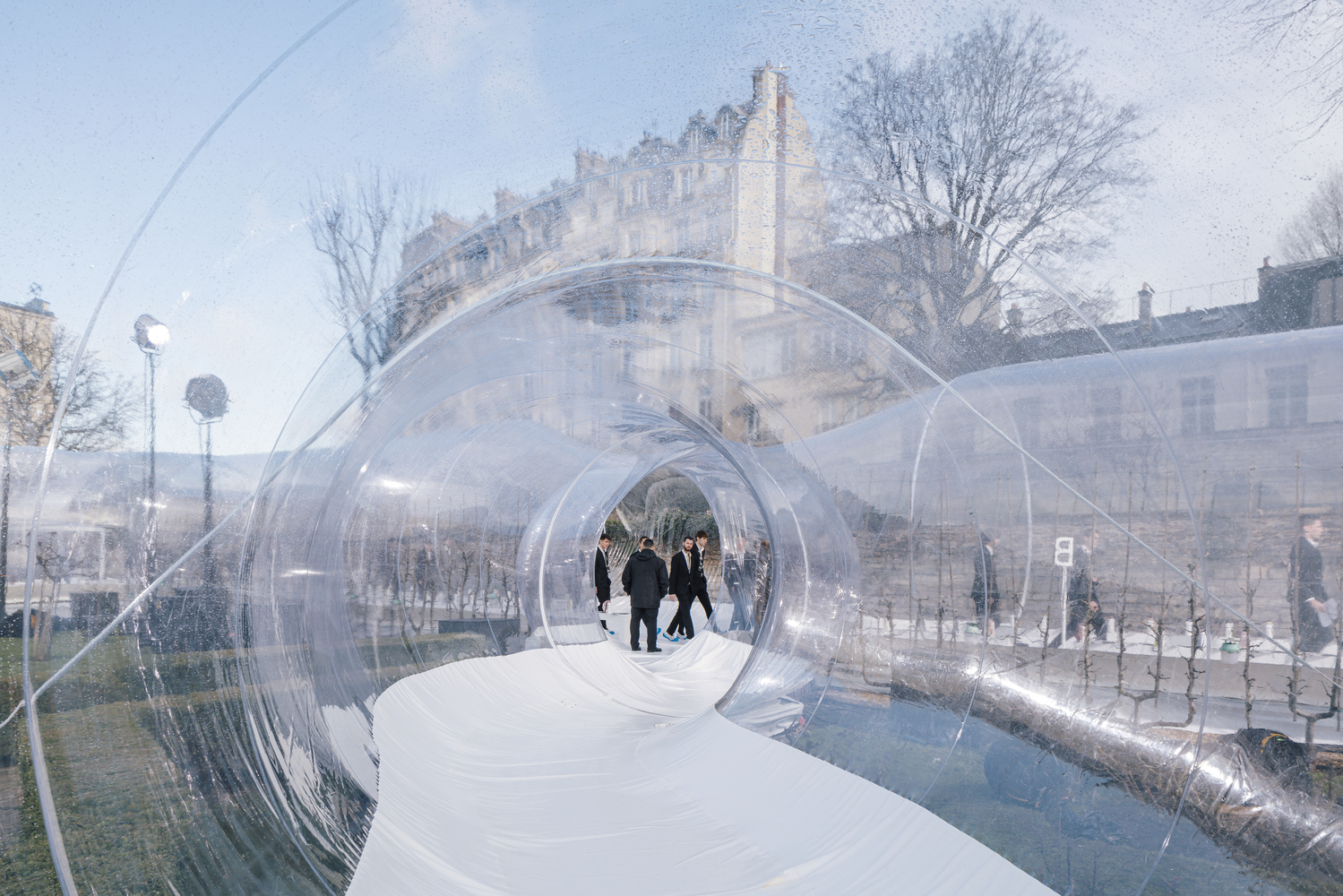
""Opposed to lightness is weight. Removing weight produces lightness; it is a value, not a defect." This perspective emphasizes the importance of lightness in architectural design, suggesting that it enhances rather than detracts from the built environment."
"Historically, transparency has been naturalized as an inherent condition of modern architecture. The shift from heavy load-bearing walls to lightweight glass envelopes has transformed architectural practices, allowing for a seamless connection between interior and exterior."
"Between Perseus's myth and the architectural pursuit of lightness, transparency emerges as a way to move away from mass, relying instead on emptiness and the play of opposites, where the translucent meets the opaque and the visible meets the invisible."
"The origins of glass in architecture can be traced back to the Chicago School, where structures transitioned to column systems, enabling the creation of openings in facades, thus promoting a new architectural language."
Lightness in architecture is explored through the lens of transparency and the use of lightweight materials. The transition from heavy load-bearing walls to glass envelopes has blurred the lines between interior and exterior spaces. This evolution is linked to inflatable architecture, emphasizing impermanence and temporary traces in landscapes. The pursuit of lightness reflects a shift from mass to emptiness, where transparency allows for a dynamic interplay between the visible and invisible, drawing on historical movements like the Chicago School and Le Corbusier's principles.
Read at ArchDaily
Unable to calculate read time
Collection
[
|
...
]