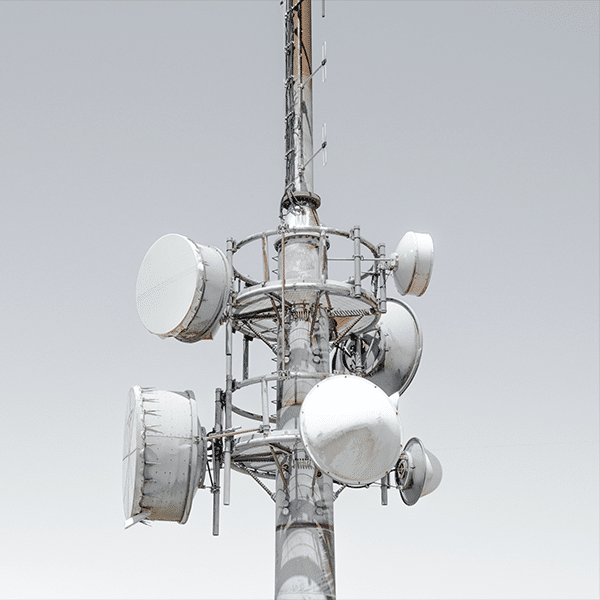
"Spectrum below 1 GHz could significantly boost 4G and 5G coverage in rural areas, according to the report from GSMA Intelligence. Rural areas depend heavily on low-band spectrum because it allows signal to travel further and penetrate better through barriers such as buildings. Rural residents spend twice as much time connected to low bands as their urban and rural counterparts."
"Improving the business case for rural 4G and 5G buildout would, in turn, help close the digital divide in rural areas. 4G coverage improves by a 7 percentage-point increase with every 50 MHz of spectrum below 1 GHz, the analysis said, and 5G coverage sees an 11 percentage-point increase with the same allocation. Additional spectrum can also improve download speeds by 8% and reduce congestion when users are far from cell towers, according to the GSMA analysis."
Spectrum below one-GHz allows signals to travel further and penetrate barriers, making it critical for rural cellular coverage. Rural residents spend twice as much time connected to low bands as urban counterparts and are 28% less likely to use mobile internet and 30% less likely to regularly engage in online services such as messaging, banking and education. Every 50 MHz of sub-1 GHz spectrum raises 4G coverage by seven percentage points and 5G coverage by eleven percentage points, while improving download speeds by about eight percent and reducing congestion. Increased spectrum allocation, regulatory certainty, network sharing, lower regulatory costs, and cheaper site access improve the business case for rural deployments. Case studies covered the UK, Australia, Brazil, and Indonesia, and projected mid-band needs for a future 6G era could be roughly three times current allocations, with North America potentially reaching 60% 6G penetration by 2035.
Read at Telecompetitor
Unable to calculate read time
Collection
[
|
...
]