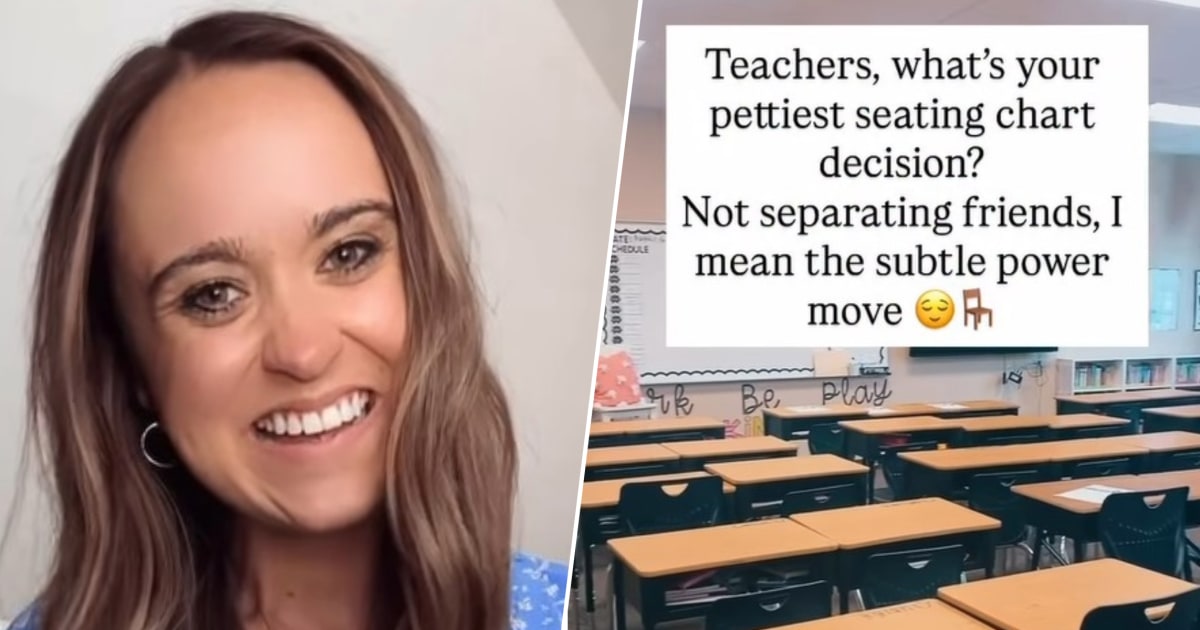
""It's just like a neverending game of musical chairs," Jensen says. Just when a teacher thinks they've perfected their seating chart, two neighboring students will have a fight, others won't stop talking or parents will email with their own seating preferences. "There's just so many things that you don't know on the surface that come to light really quickly once you put a kid next to another one," she says."
""On Valentine's Day, I sat everyone next to their crushes and all hell broke loose. It was epic." "When I have a kid who will talk to a brick wall, I seat them with a student who is still learning English. Everybody wins." "I put all the students who copy off everyone on one table. They had no idea who to copy from.""
Teachers invest considerable time designing student seating because seat placement influences classroom behavior, academic integrity, peer interactions, and emotional safety. Seating charts require frequent revision after conflicts, persistent talking, parental requests, or newly observed student dynamics. Teachers employ many tactics: pairing talkative students with English learners to encourage language practice, seating potential cheaters together to reduce copying opportunities, and arranging romantic pairings as social experiments on holidays. Some placement decisions isolate disruptive students to monitor behavior or reveal deeper mental-health needs. Teachers also create and share online tools and crowdsource ideas to optimize seating for learning and well-being.
Read at TODAY.com
Unable to calculate read time
Collection
[
|
...
]