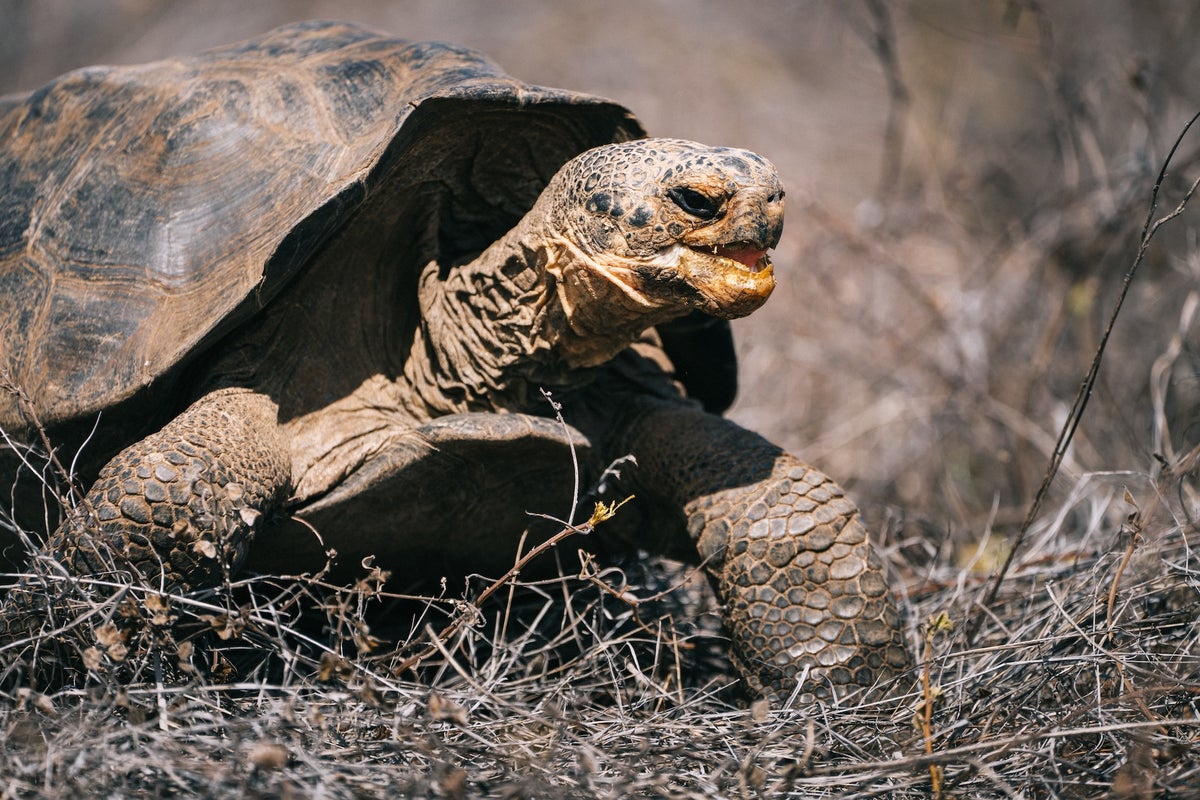
"In 2000, however, scientists made a shocking discovery: a population of tortoises 70 miles away on Isabela Island looked strikingly like the Floreana giant tortoise with their telltale saddle-shaped shells. Genetic testing confirmed these were hybrid tortoises descended from Floreana giant tortoises that must have accidentally wound up on the island after being put onboard a ship for food."
"In the carefully managed breeding program, Gibbs and his colleagues paired adults collected from Isabela Island based on genetic testing to maximize their offspring's Floreana ancestry. While the resulting animals are not exact genetic replicas of their ancestors, they do carry much of the original Floreana lineage."
"Watching the tortoises step onto Floreana and start exploring was incredibly moving, says James Gibbs, vice president of science and conservation for the nonprofit Galapagos Conservancy. It felt like the end of a 26-year effort but at the same time, a beginning."
The Floreana giant tortoise subspecies disappeared from Floreana Island approximately 180 years ago due to sailors, pirates, and invasive species. In 2000, scientists discovered hybrid tortoises on Isabela Island 70 miles away that genetically matched the extinct Floreana subspecies, descended from tortoises accidentally transported aboard ships. Through a 26-year captive breeding program, researchers paired genetically compatible adults to maximize Floreana ancestry in offspring. Last week, 158 tortoises reared through this program were released onto Floreana Island, marking the first return of Floreana-descended tortoises to their native habitat in nearly two centuries.
#species-restoration #captive-breeding-program #galapagos-conservation #genetic-ancestry-recovery #tortoise-reintroduction
Read at www.scientificamerican.com
Unable to calculate read time
Collection
[
|
...
]