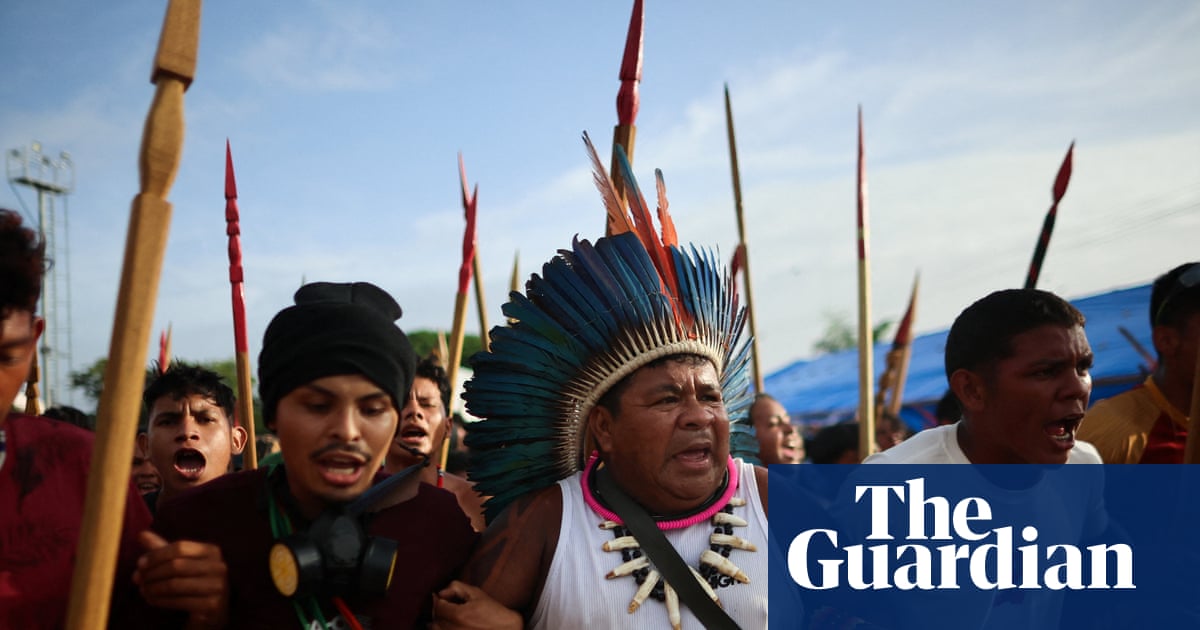
"The river won, the forest won, the memory of our ancestors won, said the campaigners in Santarem when it was clear their actions had forced the Brazilian government into a U-turn on plans to privatise one of the world's most beautiful waterways and expand its role as a soy canal."
"What was arguably most impressive about this historic win was the apparently mismatched nature of the contest: on one side were about 1,000 local river defenders, mostly from the Munduruku, Arapiun and Apiaka peoples, and on the other were some of the most powerful forces of global capitalism and climate breakdown."
"Cargill generates revenues of more than $160bn (119bn) a year, employs 155,000 people and accounts for more than 70% of the soy and maize shipped through Santarem."
Indigenous campaigners from the Munduruku, Arapiun, and Apiaka peoples in Brazil's Amazon region achieved a significant environmental victory by occupying a Cargill grain terminal in Santarem. Their actions forced the Brazilian government to reverse privatization plans for the Tapajos River and halt expansion of soy transportation infrastructure. Approximately 1,000 local river defenders confronted one of the world's largest private companies, which generates over $160 billion in annual revenue and controls more than 70% of soy and maize exports through the region. The activists intercepted grain barges and occupied the terminal for several days, disrupting global food trade operations. This victory represents Indigenous resistance against powerful corporate and capitalist forces threatening Amazon ecosystems and waterways.
#indigenous-activism #amazon-conservation #corporate-resistance #environmental-justice #tapajos-river-protection
Read at www.theguardian.com
Unable to calculate read time
Collection
[
|
...
]