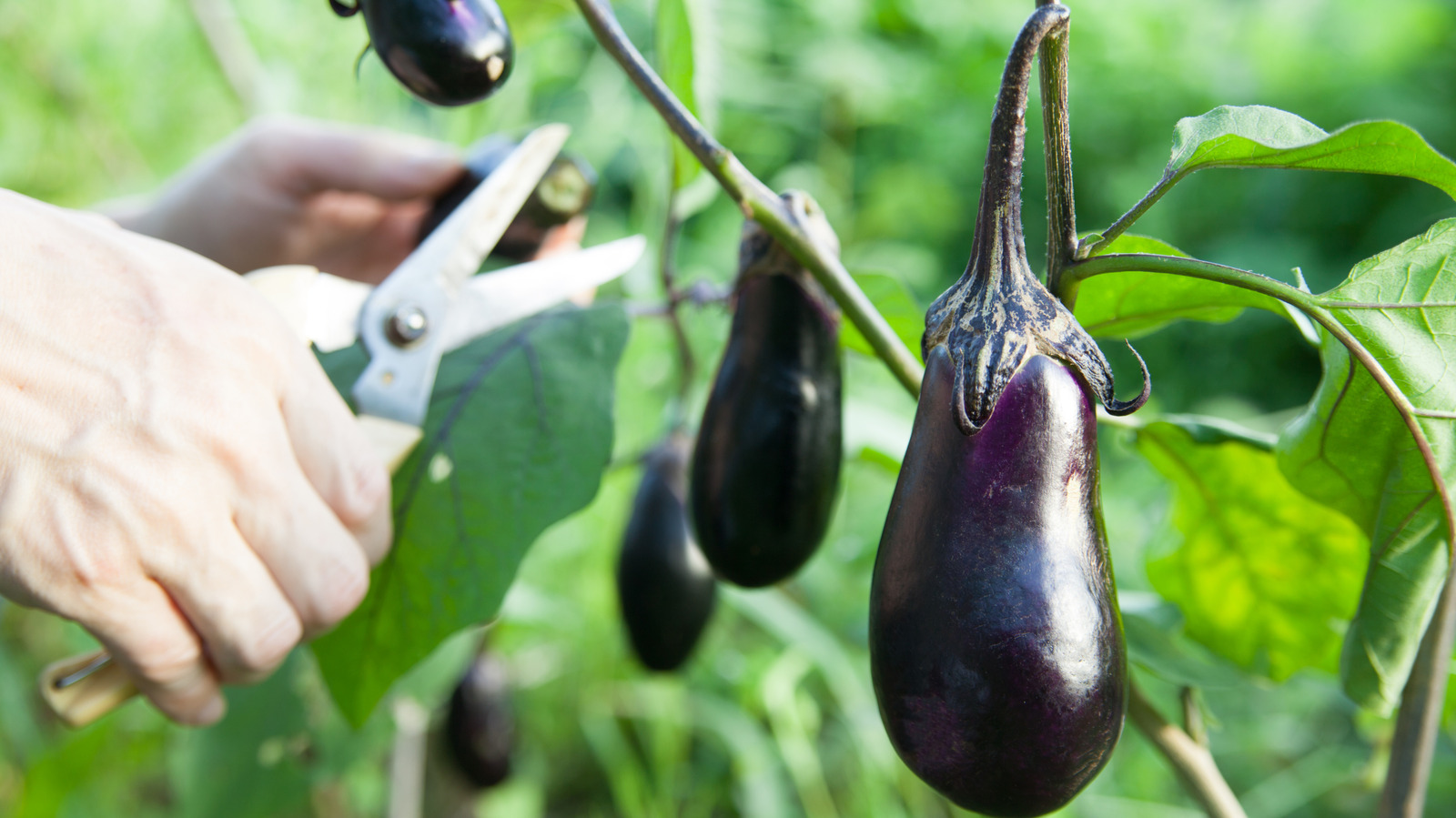
"Eggplants have a particularly long growing season, with an almost 100-day window between seeding and maturity. You can speed up the process by buying transplants from the garden store, but starting eggplants indoors at home will really help give you a leg up on the season and prepare the vegetables for a more reliable harvest."
"It's also a lot easier to control the temperature and moisture of the soil when it's inside a container, and sprouting eggplant seeds indoors has been shown to lead to a higher yield. Plus, it's fun to watch the whole lifespan of a vegetable, and eggplant seeds can start germinating just five days after planting."
"To start your eggplants indoors, just plant the seeds about ¼ inch deep in a container with good drainage and cover it with plastic wrap. Eggplants germinate at around 70 degrees Fahrenheit, so you might need a heat mat depending on the temperature of your home. If you do have a mat, crank it up to 80 degrees Fahrenheit."
Starting seeds indoors is an effective way to prepare for a successful growing season. Eggplants are ideal candidates for indoor seeding, as they have a long 100-day growing cycle and can be started two months before the final frost. Indoor seeding allows better control of temperature and moisture, resulting in higher yields compared to purchasing transplants. Eggplants require specific conditions: seeds should be planted approximately one-quarter inch deep in well-draining containers, maintained at 70-80 degrees Fahrenheit with a heat mat, and exposed to at least 10 hours of direct sunlight daily. Soil moisture must be carefully monitored through frequent checks and gentle misting rather than soaking.
#indoor-seed-starting #eggplant-cultivation #garden-preparation #seed-germination #growing-conditions
Read at Tasting Table
Unable to calculate read time
Collection
[
|
...
]