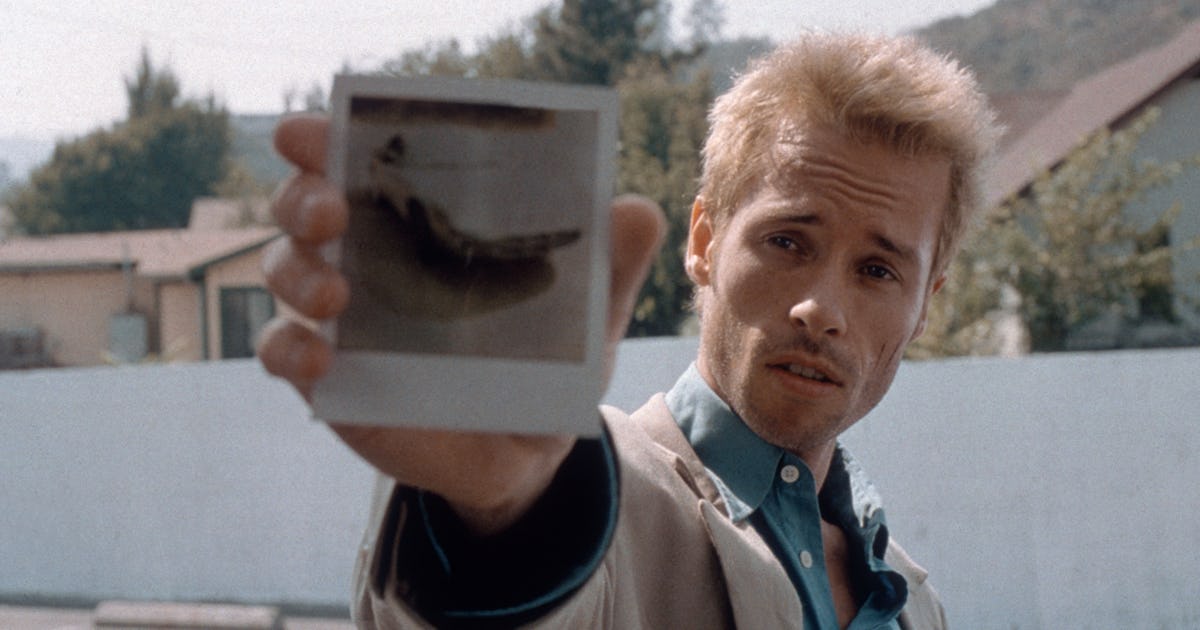
"Memento provides a Rosetta Stone to decode deeper meaning within his larger-scale efforts, offering a window into the complex paradoxes that add thematic weight to his intricately plotted stories. Nolan's films often jump from a familiar genre archetype. In Memento, Guy Pearce's Leonard Shelby recalls the weary antiheroes of film noir, but his filmography is full of familiar figures ranging from superheroes to great men of history."
"These mission-driven protagonists all strive toward a clearly defined goal. Leonard's is to find and murder the mysterious 'John G,' whom he believed to have assaulted and murdered his wife. But the real quest for the leading man in Nolan's work lies less in getting what they want, be it revenge against an enemy in Memento, victory over a rival in The Prestige, or humanity's salvation in Interstellar."
Christopher Nolan exemplifies Jean Renoir's concept of filmmakers continuously reinventing their breakthrough work. Memento serves as a Rosetta Stone for understanding Nolan's entire filmography, revealing patterns beyond obvious stylistic hallmarks like dead wives and inventive time manipulation. Nolan's films typically anchor familiar genre archetypes—film noir antiheroes, superheroes, historical figures—within deliberately disorienting narratives that play with chronology and invert cause-and-effect relationships. His mission-driven protagonists pursue clearly defined external goals: revenge, victory, or salvation. However, their deeper quest involves internal yearning for existential needs like truth, peace, and absolution, often symbolized by elusive homes or beloved figures that transcend surface-level plot objectives.
Read at Inverse
Unable to calculate read time
Collection
[
|
...
]