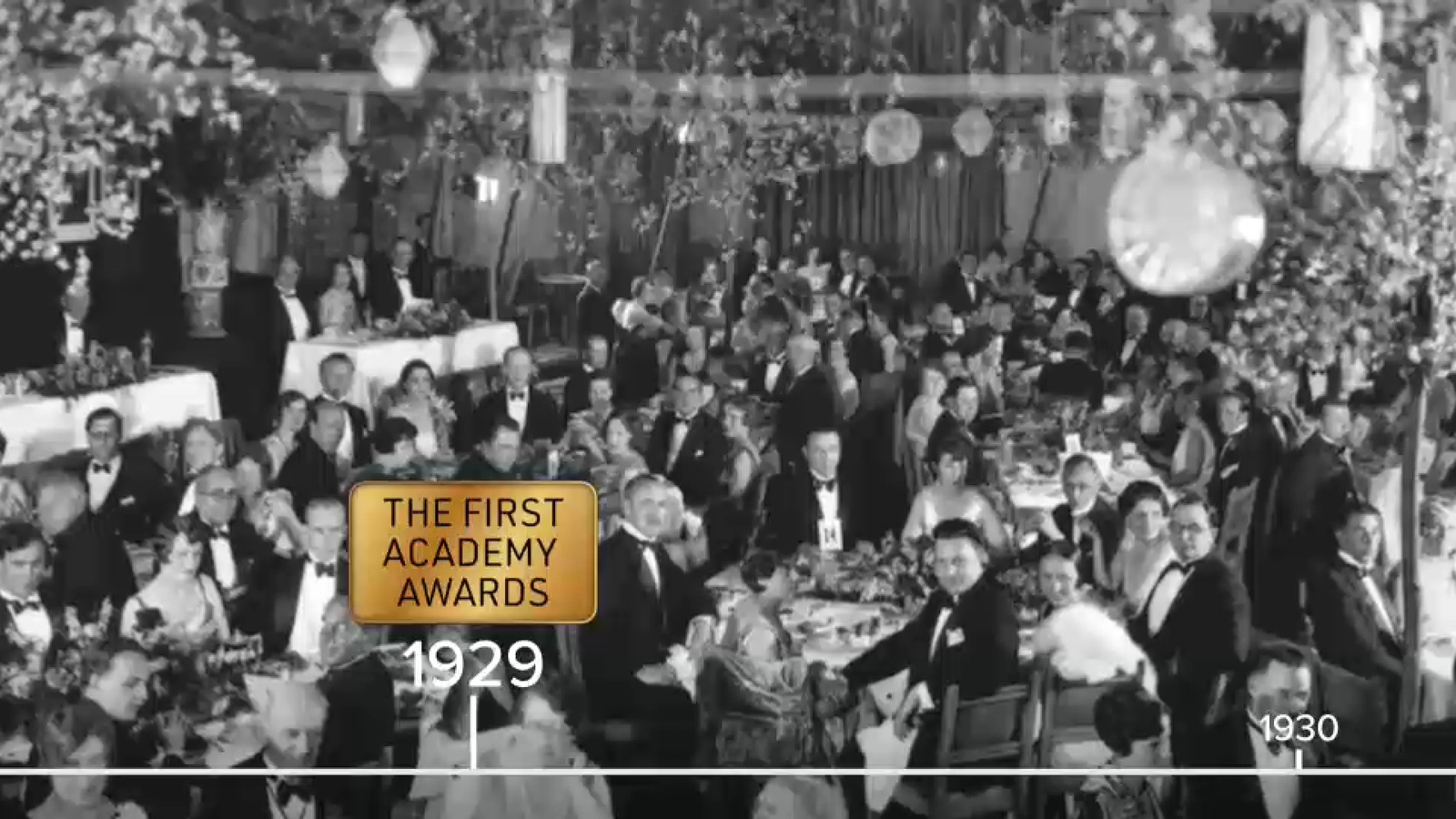
"We had 270 people that night, it cost you $5 to eat here, which is equivalent now to $90. Of course, Sid Grauman, the mastermind of the Chinese theater. You had anybody who was everybody and of course, there was a special honor for Mr. Charlie Chaplin."
"And that went well for a few years until one of the newspapers actually ended up breaking the embargo and announcing the winners early. The solution was the sealed envelope system that was introduced in 1941 and is still used today."
"There was a lot of debate whether the Academy wanted to even have the ceremony on TV, but I think they realized that they needed to. That's when you get a lot of these exciting moments like the tie for Best Actress between Katharine Hepburn and Barbra Streisand in the late 60s."
The first Academy Awards ceremony in 1929 was a private dinner at the Roosevelt Hotel with 270 attendees, costing $5 per person. Hosted by Douglas Fairbanks, it lasted only 15 minutes with winners known months in advance. In 1930, the Academy began announcing winners on ceremony night, though newspapers received embargoed advance lists. When a newspaper broke the embargo, the sealed envelope system was introduced in 1941 and remains standard today. Television broadcast began in 1953, transforming the event into a major spectacle. Throughout its history, the Oscars achieved significant milestones, including Hattie McDaniel breaking the color barrier in 1940 and Halle Berry becoming the first Black actress to win Best Actress.
#academy-awards-history #oscar-ceremony-evolution #television-broadcasting #racial-barriers-in-entertainment
Read at ABC7 Los Angeles
Unable to calculate read time
Collection
[
|
...
]