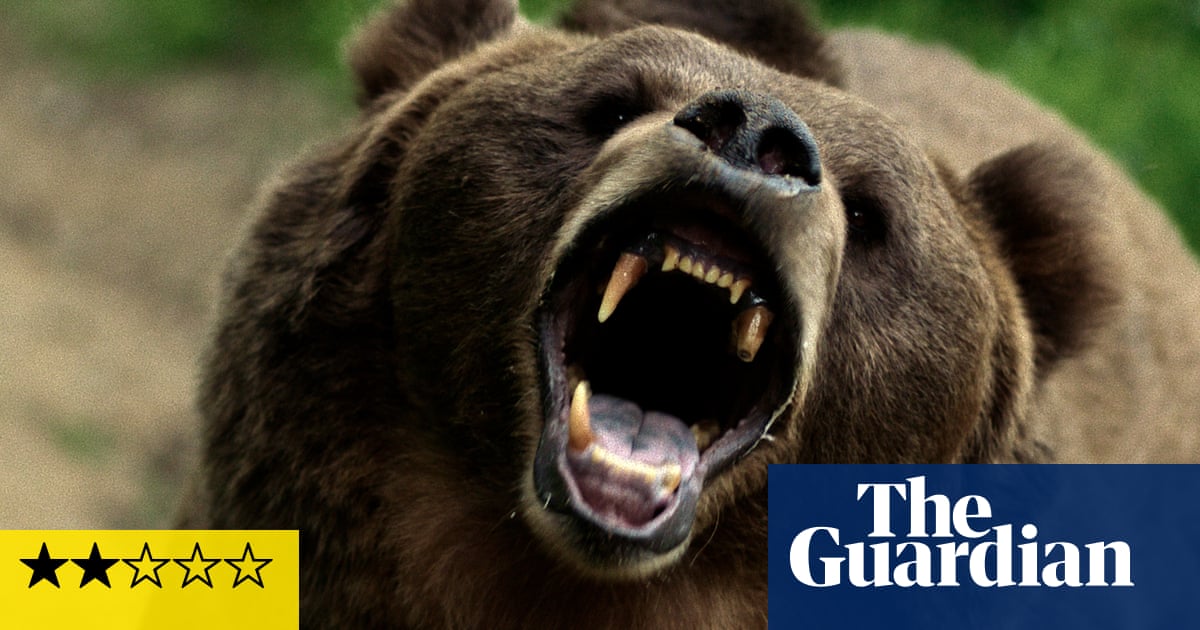
"Despite its lurid poster art, as an ursine rampage film this falls closer to the serious Grizzly Man/Timothy Treadwell end of the scale, rather than the Cocaine Bear one. Based on a freak August 1967 tragedy in which two women were separately mauled to death by grizzlies in Montana's Glacier National Park (described here as a trillion to one occurrence), Burke Doeren's debut grips in tooth'n'claw terms, but is considerably less sure-footed when it comes to people."
"The initial attack with Julie and Roy caught prone in sleeping bags conveys with horrendous immediacy what being at the mercy of a quarter-ton of fur and muscle must be like. And Doeren further hammers home the verisimilitude, using the visitors' lodge to firmly establish the geography and vulnerability of the nervy rescue mission protected only by a fire bucket to reach screaming Julie."
"Doeren cranks up this near-forensic grasp of the predicament by his focus on the inflicted injuries: doctor-in-the-house John (Oded Fehr) battles to stop Roy bleeding out, while it falls to Paul to pick up the pieces at Trout Lake. Given the unsparing realism in the heat of the moment, it's a pity the framing for the creature feature is so unconvincing. Shot with the overlit streaming-era sunburst look, the 1960s setting feels ersatz and the various teen entanglements supposedly there to endear/bug us into caring about the bait are Scooby-Doo level stuff."
The film recreates a freak August 1967 tragedy in Glacier National Park where two women were mauled to death by grizzlies. Burke Doeren's debut emphasizes the horror and physical reality of bear attacks, staging a horrifying assault on Julie and Roy with visceral immediacy and detailed injury treatment. Rangers distracted by fire season and interwoven character roles—Michele, Paul, Joan, John—drive the rescue and medical responses. The visitors' lodge becomes a crucial geographic set piece for the rescue, while the portrayal of injuries and bleeding conveys near-forensic realism. The period setting, however, looks overlit and ersatz, and teen entanglements feel thin and unconvincing.
Read at www.theguardian.com
Unable to calculate read time
Collection
[
|
...
]