"Around 1970, United Artists - which owned the film rights to J R R Tolkien's trilogy - asked him to helm an adaptation. Over six months, he and Italian architect Rospo Pallenberg, who was looking to break into the movies, drafted a map of Middle Earth and in-depth character analyses, broke down scenes, and devised solutions to special-effects problems in a pre-CGI world."
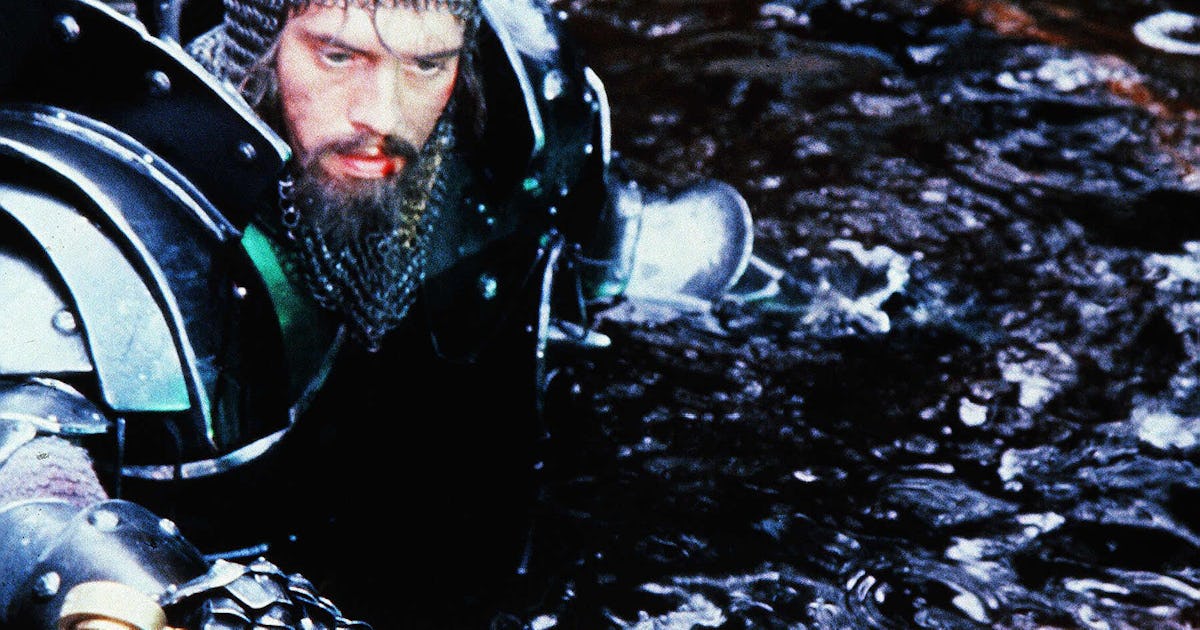
"Boorman's film contrasts the lush beauty of the landscapes with the violence of the men who inhabit them, their armor streaked with blood, their vision blinkered by lust and greed. While cinematographer Alex Thomson's painterly (and Oscar-nominated) compositions are imbued with a dreamlike sheen, conjuring an atmosphere of magic, this is a world in which prophecies are serious business."
Around 1970, director John Boorman was commissioned by United Artists to adapt J.R.R. Tolkien's Lord of the Rings trilogy into a single three-hour film. Over six months, Boorman and architect Rospo Pallenberg developed detailed character analyses, mapped Middle Earth, and solved special-effects challenges for a pre-CGI era, including casting 10-year-olds as Hobbits with dubbed voices. The studio ultimately lacked interest and funding for the ambitious project. Boorman's creative concepts and visual ideas subsequently influenced his 1981 medieval epic Excalibur, which condenses King Arthur's legend into a two-hour film. Excalibur contrasts lush landscapes with brutal violence, featuring blood-streaked armor and characters driven by lust and greed. Cinematographer Alex Thomson's Oscar-nominated compositions create a dreamlike, magical atmosphere where prophecies and visions shape character decisions.
Read at Inverse
Unable to calculate read time
Collection
[
|
...
]