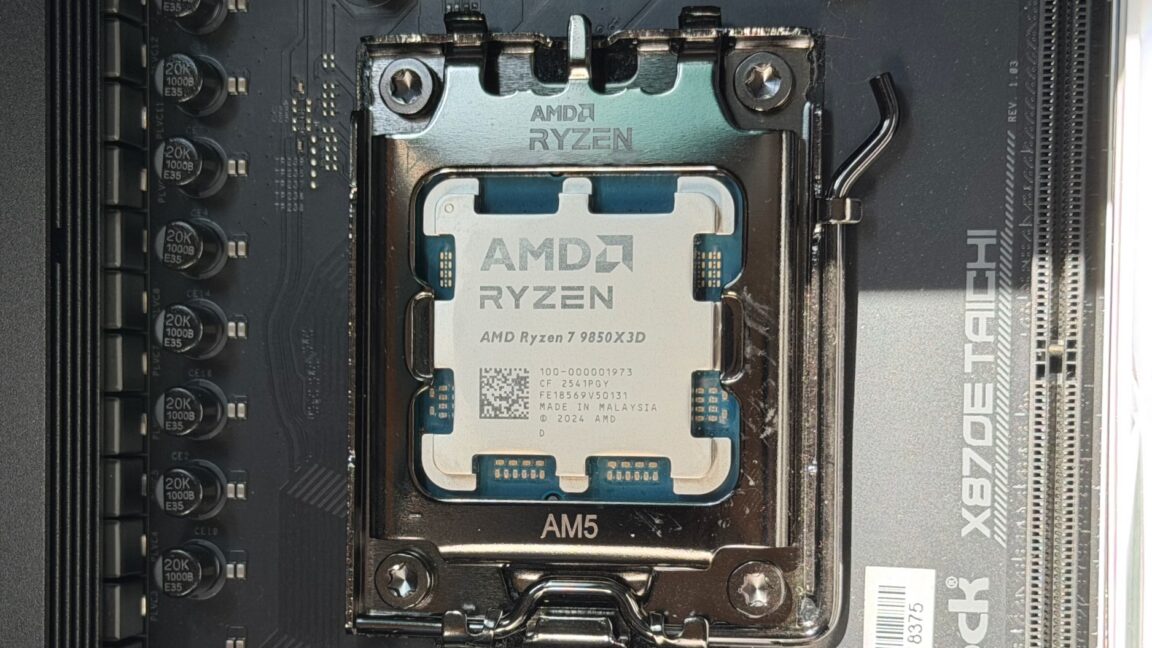
"Probably not worth it The Ryzen 7 9850X3D mostly does what it says it does: It's a mild speed bump to AMD's best gaming processor that, in most cases, very slightly extends the company's performance lead over Intel chips like the Core Ultra 9 285K. But the vanilla 9800X3D is almost as fast, it uses 25 or 30 W less power during gaming (which also results in temperatures that are 10 to 15 degrees Celsius cooler), and it's $30 cheaper as of this writing."
"As someone who routinely runs his own Ryzen desktop chips in Eco Mode to reduce power consumption and temperatures and hit a more efficient spot on the performance-per-Watt curve, the numbers that the 9850X3D posted in our testing make it seem like an undesirable trade-off, even if you're in the target market for a fast-as-possible, money-no-object, bragging-rights gaming PC. The good"
The Ryzen 7 9850X3D provides a small performance uplift over existing X3D chips, mainly improving single-threaded tasks and slightly widening AMD's lead over some Intel chips. The vanilla 9800X3D remains nearly as fast while using 25–30 W less power during gaming, running 10–15 °C cooler, and costing about $30 less. CPU improvements matter most at very high frame rates and lower resolutions; at 1440p and 4K, GPUs typically limit performance. Power consumption and temperatures for the 9850X3D are reasonable and comparable to other Zen 5 CPUs. High component prices make full system builds less attractive.
Read at Ars Technica
Unable to calculate read time
Collection
[
|
...
]