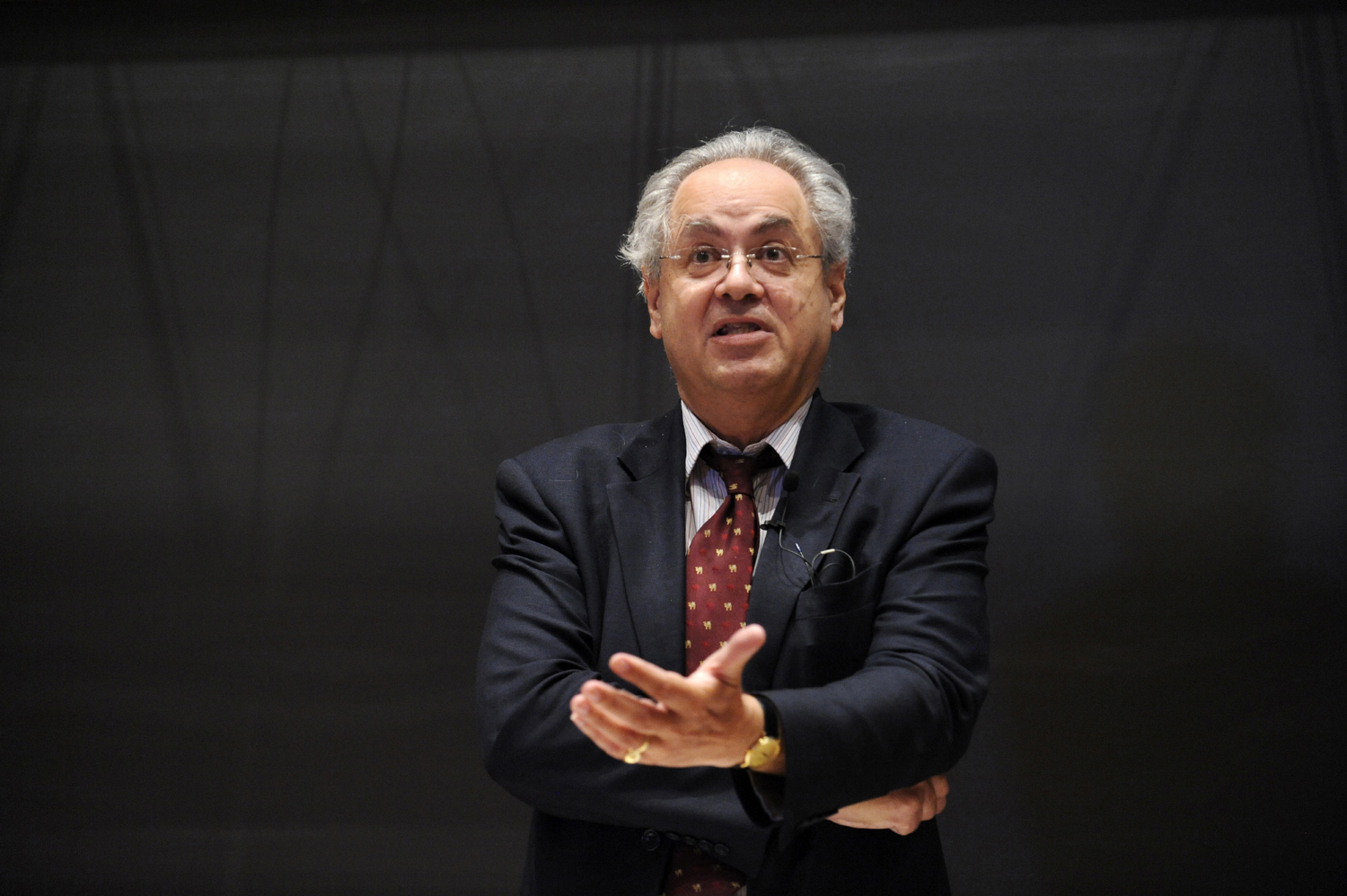
"David Abulafia, one of the leading historians of the medieval Mediterranean and the maritime world, has passed away at the age of 76. Abulafia earned his PhD at King's College, University of Cambridge, and then joined Gonville & Caius College in 1974 as a Research Fellow. He remained at Cambridge for the rest of his career, becoming Professor of Mediterranean History and later Professor Emeritus, and he served as Chairman of the History Faculty from 2003 to 2005."
"Among his most notable books are: The Two Italies: Economic Relations between the Norman Kingdom of Sicily and the Northern Communes (1977) Frederick II: A Medieval Emperor (1988) A Mediterranean Emporium: The Catalan Kingdom of Majorca (1994) The Western Mediterranean Kingdoms, 1200-1500: The Struggle for Dominion (1997) The Great Sea: A Human History of the Mediterranean (2011) The Boundless Sea: A Human History of the Oceans (2019)"
"In later years, Abulafia was also an outspoken participant in debates about how history should be written and taught, and he was a prominent defender of academic freedom. He was appointed CBE, and was a Fellow of the British Academy. David is survived by his wife, historian Anna Brechta Sapir, and their two daughters. See this interview with David in the Chicago Journal of History Top Image: Photo by Marit Hommedal / SCANPIX / Holbergprisen"
David Abulafia, a leading historian of the medieval Mediterranean and the maritime world, died at age 76. He earned his PhD at King's College, University of Cambridge and joined Gonville & Caius College in 1974 as a Research Fellow, remaining at Cambridge for the rest of his career. He became Professor of Mediterranean History, later Professor Emeritus, and chaired the History Faculty from 2003 to 2005. He wrote sweeping studies of the Mediterranean and the oceans and influential work on medieval Italy and Sicily, including The Great Sea (2011) and The Boundless Sea (2019). He was appointed CBE, was a Fellow of the British Academy, and is survived by his wife, historian Anna Brechta Sapir, and two daughters.
Read at Medievalists.net
Unable to calculate read time
Collection
[
|
...
]