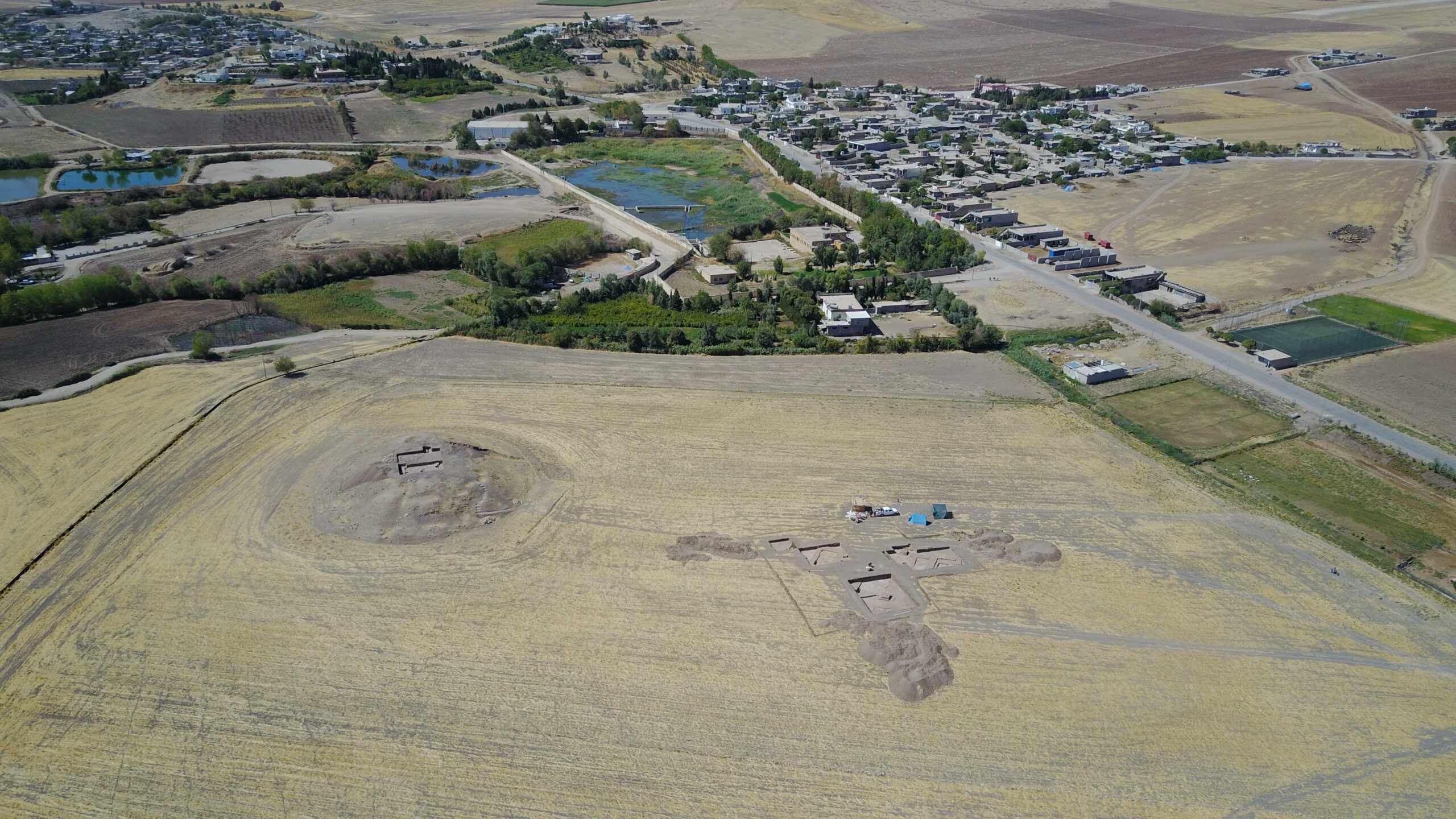
"Archaeologists working in northern Iraq say they have found fresh evidence that Christians and Zoroastrians may have lived peacefully side by side in the fifth century. After three years of research connected to the site of Gird-î Kazhaw in the Kurdistan Region of Iraq, a team from Goethe University Frankfurt and partner institutions reports that a long-misunderstood building complex dating to around 500 AD now looks very much like an early Christian meeting place-located just steps away from a small Sasanian-period fortification."
"The ten-person team was led by Dr Alexander Tamm (Friedrich-Alexander-Universität Erlangen-Nürnberg) and Professor Dirk Wicke (Goethe University Frankfurt). Although they returned without portable artefacts, they say the architecture they uncovered-along with a small but telling piece of decorated pottery-adds up to a clearer picture of the building's function and its place within a multi-religious landscape. From "mysterious pillars" to a likely church"
"Gird-î Kazhaw was first identified in 2015, but the purpose of its main stone structure remained uncertain. Early clues included five square pillars built from quarry stone and partially coated in white gypsum plaster-features that had already made some researchers suspect a church. Geophysical survey work also indicated additional buried walls, raising the possibility that the building might once have belonged to a larger monastic complex."
Excavation at Gird-î Kazhaw in the Kurdistan Region dated the site to around 500 AD and identified a building likely used as an early Christian meeting place adjacent to a small Sasanian-period fortification. Architectural evidence includes multiple square stone pillars, evolving floors from rammed earth to stone and broken brick, and brick walls. A small decorated pottery sherd supports the dating and function. Geophysical survey and additional buried walls indicate a larger complex, possibly monastic, and the layout suggests a three-aisled plan with a central nave, consistent with early Christian architecture within a multi-religious landscape.
Read at Medievalists.net
Unable to calculate read time
Collection
[
|
...
]