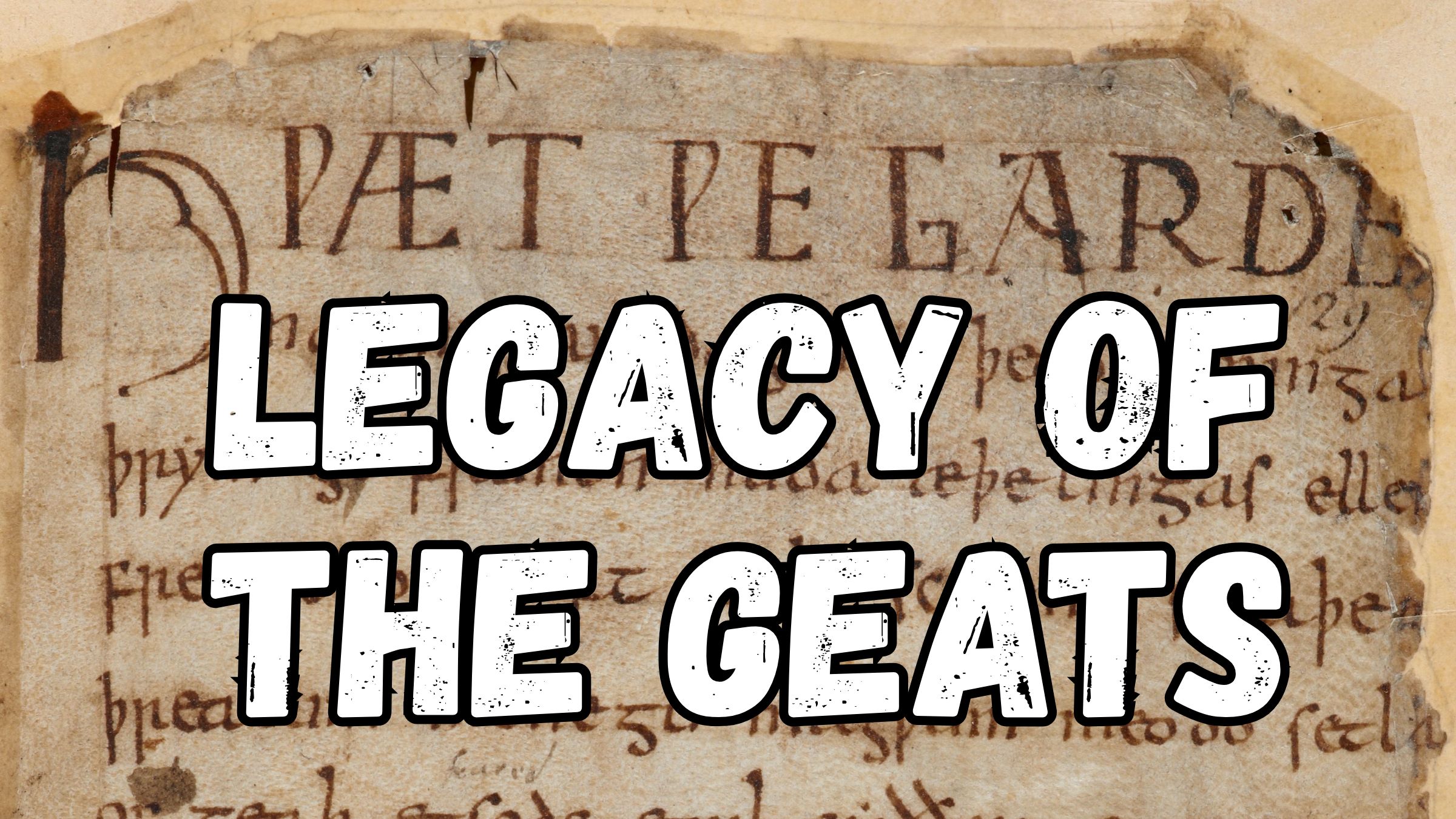
"These words are spoken by a member of Beowulf's retinue following the great hero's death at the end of the epic Old English poem. The full passage foreshadows the rekindling of war with the Swedes and the coming doom of Beowulf's people, the Geats. It implies a victory and expansion of authority for the Swedes and a defeat for the Geats, who wither away, eliminated at worst or heartlessly subsumed into the encroaching Swedish dominion at best."
"But this narrative paints a somewhat misleading picture. The identity of the Geats as a people distinct from the Swedes most likely survived-at least for some time-and remains conceptually alive and well in Sweden today, depending upon which strand of the philological quagmire one chooses to follow."
"And while it can't necessarily be ruled out that Beowulf's Geats weren't an amalgamation or conflation of existing tribes as mistakenly or intentionally construed by the poet or passage of time, two theories presently lead the pack in terms of anchoring the tribe in specific geographic territories. One of these posits that the Geats hailed from Götaland on the Swedish mainland, while the other posits that their home was the Baltic island of Gotland."
Beowulf's epic poem concludes with a prophecy of the Geats' doom following the hero's death, predicting Swedish invasion and the tribe's elimination or subjugation. However, historical and philological evidence suggests the Geats maintained their distinct identity for some time and continue to exist conceptually in contemporary Sweden. Scholars have long debated the Geats' origins and homeland location. A discredited 19th-century theory claimed Beowulf was a Jute from Denmark. Two leading theories currently dominate: one places the Geats in Götaland on the Swedish mainland south of Lake Mälaren, while the other locates them on the Baltic island of Gotland. The Götar inhabited Götaland, situated between the Baltic Sea and the straits separating Jutland from Scandinavia.
Read at Medievalists.net
Unable to calculate read time
Collection
[
|
...
]