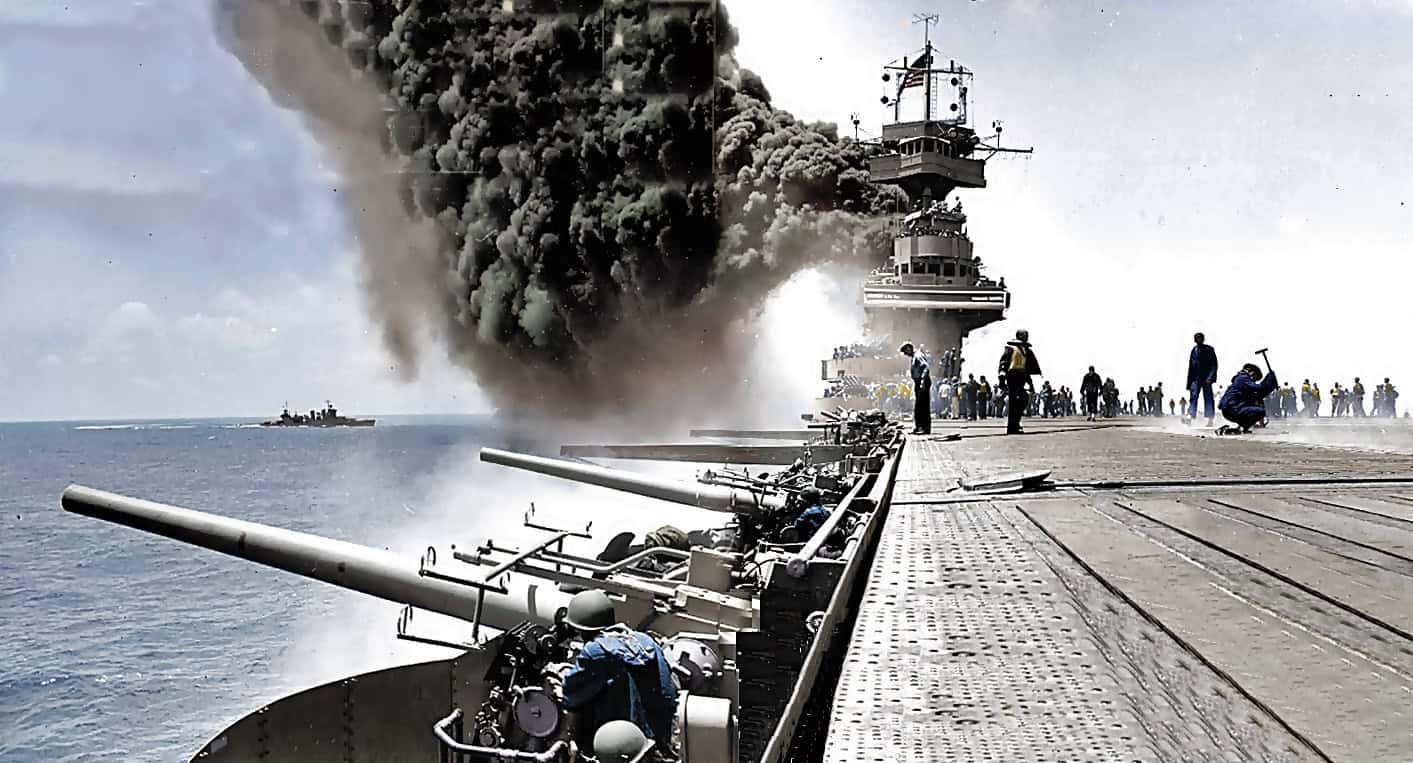
"WWII began with most naval powers still believing the battleship ruled the seas. Fleets were built around heavily armored ships with massive guns meant to destroy enemy navies in decisive surface battles. By the war's end, that thinking had changed dramatically. Aircraft carriers could strike targets hundreds of miles away, while submarines choked off supply lines across entire oceans."
"Radar, naval aviation, and coordinated fleet tactics reshaped warfare at sea and permanently shifted global naval strategy and how power is projected today. Understanding how World War II was fought at sea helps explain why certain ships became legendary and why naval strategy changed so dramatically during the conflict."
World War II fundamentally transformed naval warfare, proving that ocean control determined global conflict outcomes. While battleships initially dominated naval strategy, the war revealed that aircraft carriers and submarines were reshaping combat at sea. Carriers could strike targets hundreds of miles away, submarines disrupted supply lines across oceans, and innovations like radar and coordinated fleet tactics revolutionized naval operations. Ships became symbols of national power and played decisive roles in pivotal Atlantic and Pacific battles. By war's end, naval thinking had shifted dramatically from battleship-centered fleets to carrier and submarine-based strategies, permanently altering how nations project power at sea.
#world-war-ii-naval-warfare #aircraft-carriers-vs-battleships #naval-strategy-evolution #submarines-and-sea-power #maritime-military-history
Read at 24/7 Wall St.
Unable to calculate read time
Collection
[
|
...
]