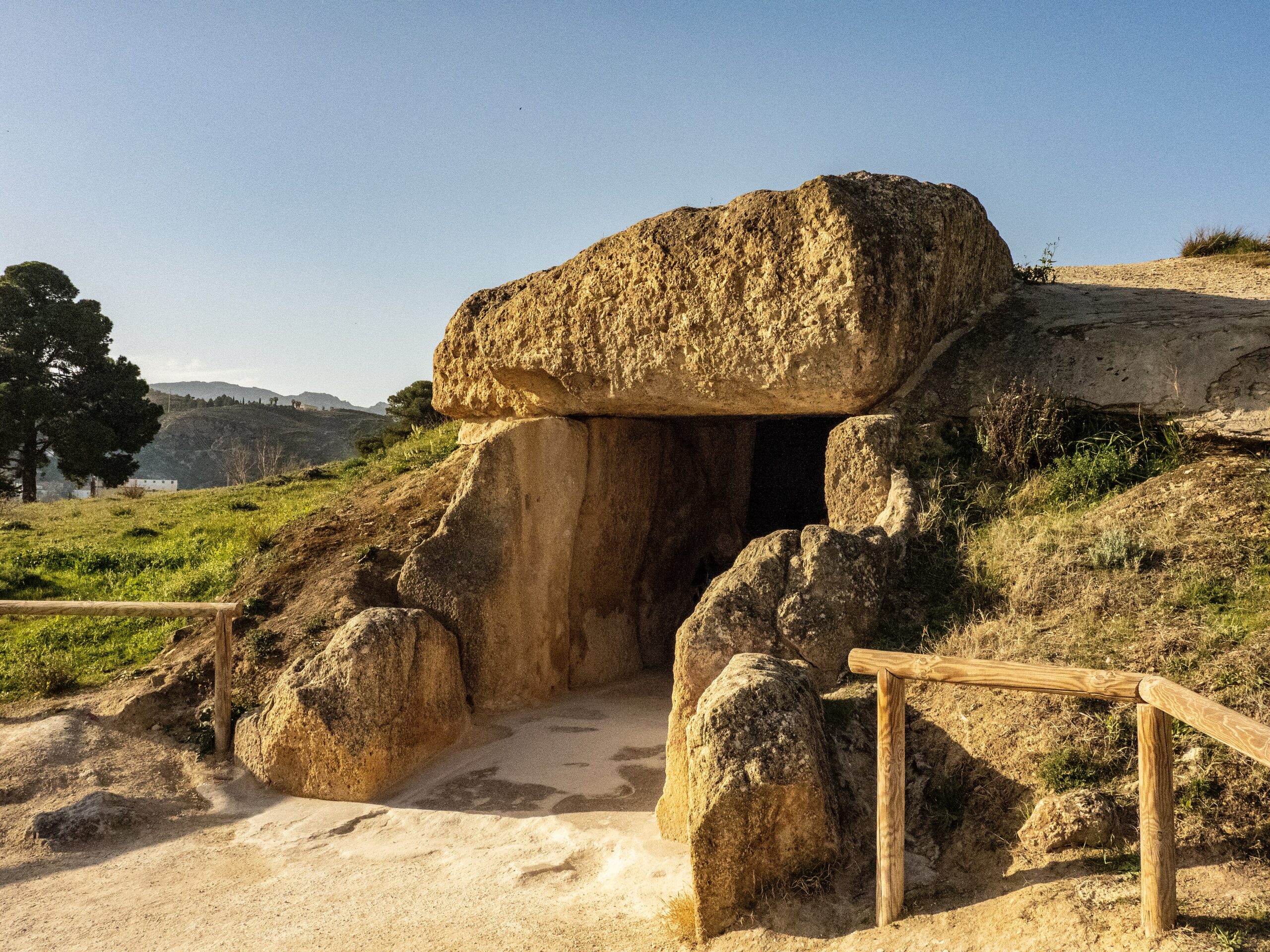
"The Menga dolmen is one of the largest megalithic monuments in Europe. Built between roughly 3800 and 3600 BC, it forms part of the Antequera Dolmens Site, which is listed as a UNESCO World Heritage Site. Although constructed during the Neolithic period, the monument continued to attract visitors and activity throughout later historical periods."
"Both individuals were older adult men, each estimated to have been over 45 years of age at death. They were buried in simple pits in the atrium of the dolmen without any grave goods. The bodies were placed face down, with their heads resting on their right side and oriented toward the southwest. Notably, the burials were carefully aligned with the axis of symmetry of the dolmen, a placement that suggests a deliberate relationship between the deceased and the ancient monument."
"Radiocarbon dating showed that the two men were buried about 190 years apart, suggesting that the site was reused repeatedly during the early medieval period."
The Menga dolmen, one of Europe's largest megalithic monuments built between 3800 and 3600 BC near Antequera, Spain, continued to hold significance thousands of years after its construction. Archaeological and genetic analysis revealed two medieval men, both over 45 years old, were buried in the dolmen's atrium between the eighth and eleventh centuries. The burials were carefully positioned face down with heads on their right side, deliberately aligned with the dolmen's axis of symmetry. Radiocarbon dating indicated the men were buried approximately 190 years apart, suggesting repeated reuse of the site during the early medieval period. This discovery demonstrates how prehistoric monuments retained cultural and symbolic importance throughout subsequent historical periods.
#neolithic-monuments #medieval-burials #archaeogenetics #unesco-world-heritage-site #prehistoric-reuse
Read at Medievalists.net
Unable to calculate read time
Collection
[
|
...
]