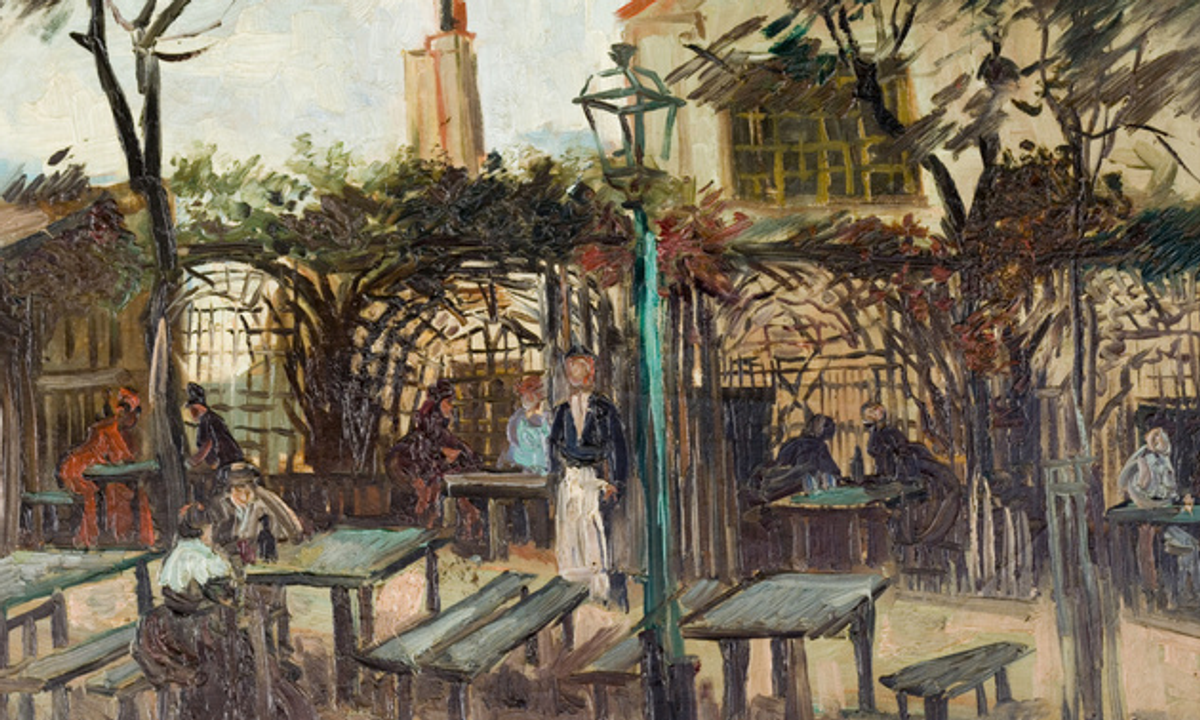
"In Van Gogh's time, social life for men often revolved around the café. In Paris these were not simply coffee houses, there was always wine, most served food-and some offered entertainment. By 1886, when Vincent moved to the French capital to stay with his brother Theo, cafés had become a central part of modern life and an attractive subject for avant-garde painters."
"The culture of cafés is the lively subject for an exhibition opening shortly: Café Society: Art and Sociability in Belle Epoque Paris. With more than 50 paintings by a wide range of turn-of-the-century artists, its first stop is the museum, on the outskirts of Copenhagen, Denmark (6 February-31 May). The show will then go to America: to the , Memphis, Tennessee (18 June-6 September) and the , Omaha, Nebraska (26 September-17 January 2027)."
"The presentation in Denmark includes three Van Gogh paintings of Parisian cafés. The two works from European museums are not going to America. That leaves Restaurant Rispal at Asnières (from the Nelson-Atkins Museum of Art in Kansas City, Missouri), which will be shown in Omaha. The painting is not going to Memphis, because the Nelson-Atkins wants to display it during the football World Cup in the city in June-July."
Cafés in Belle Époque Paris functioned as central social hubs offering wine, food and entertainment and became prominent subjects for avant-garde painters. Vincent van Gogh moved to Paris in 1886 to live with his brother Theo and frequented cafés in Montmartre as places to eat, drink, read and socialize with fellow artists. Montmartre retained semi-rural features, and guinguettes provided simple outdoor tavern seating. An exhibition titled Café Society: Art and Sociability in Belle Epoque Paris will present more than fifty works, opening in Copenhagen and later traveling to venues in the United States, with some Van Gogh works limited in travel.
Read at The Art Newspaper - International art news and events
Unable to calculate read time
Collection
[
|
...
]