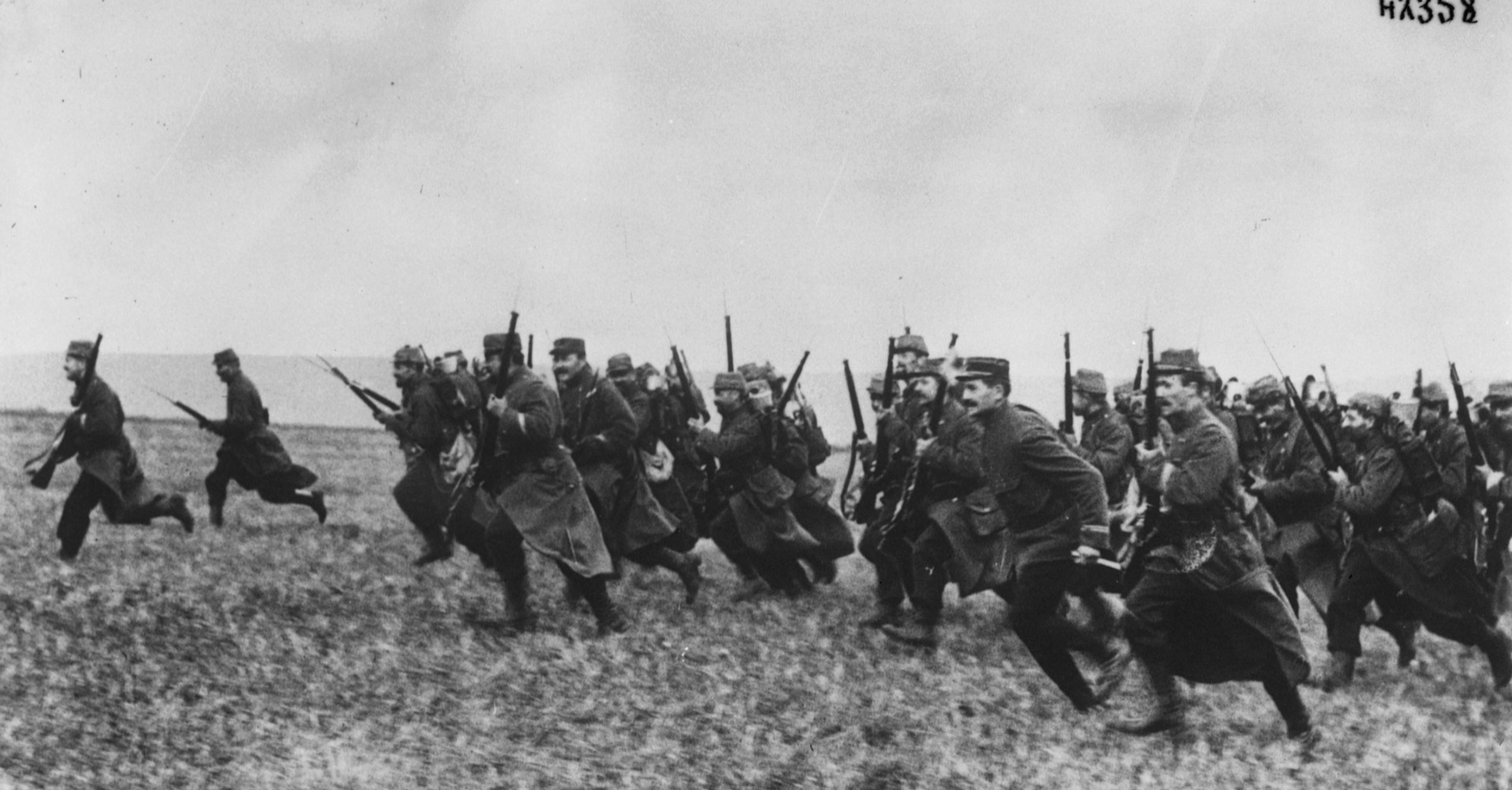
"The First Battle of the Marne, fought between 6 and 10 September 1914, was a major and successful Allied counterattack against the German invasion of French territory the previous August. Often referred to as the 'Miracle of the Marne', the French and British armies rallied to exploit a split in the German lines and impose a strategic defeat on the enemy. Although it looked very likely at the end of August, France did not fall, and Paris was saved. The significance of the Battle of the Marne was that German hopes for a quick and decisive victory were shattered within six weeks of the conflict beginning."
"In a highly ambitious plan of attack, known as the Schlieffen Plan, the German high command intended to sweep through neutral Belgium and attack the French Army on French soil. The manoeuvre would bypass the main French fortifications, permit the capture of Paris, and lead to the surrender of France in just six weeks. Even the German generals were far from convinced they had enough troops to accomplish the plan, and they were right to have been a little sceptical that it would all be quite so easy as it appeared on paper."
The First Battle of the Marne (6–10 September 1914) was a major Allied counterattack that stopped the German advance through northern France. French and British forces exploited a split in German lines to impose a strategic defeat and prevent the capture of Paris. The German Schlieffen Plan aimed for a quick victory by sweeping through Belgium and bypassing French fortifications, but stronger-than-expected Belgian and French resistance and logistical problems halted the advance. French offensives around Alsace were repulsed, and a small British Expeditionary Force joined operations. Casualties were extremely high, with about 300,000 French and German losses in two weeks.
Read at World History Encyclopedia
Unable to calculate read time
Collection
[
|
...
]