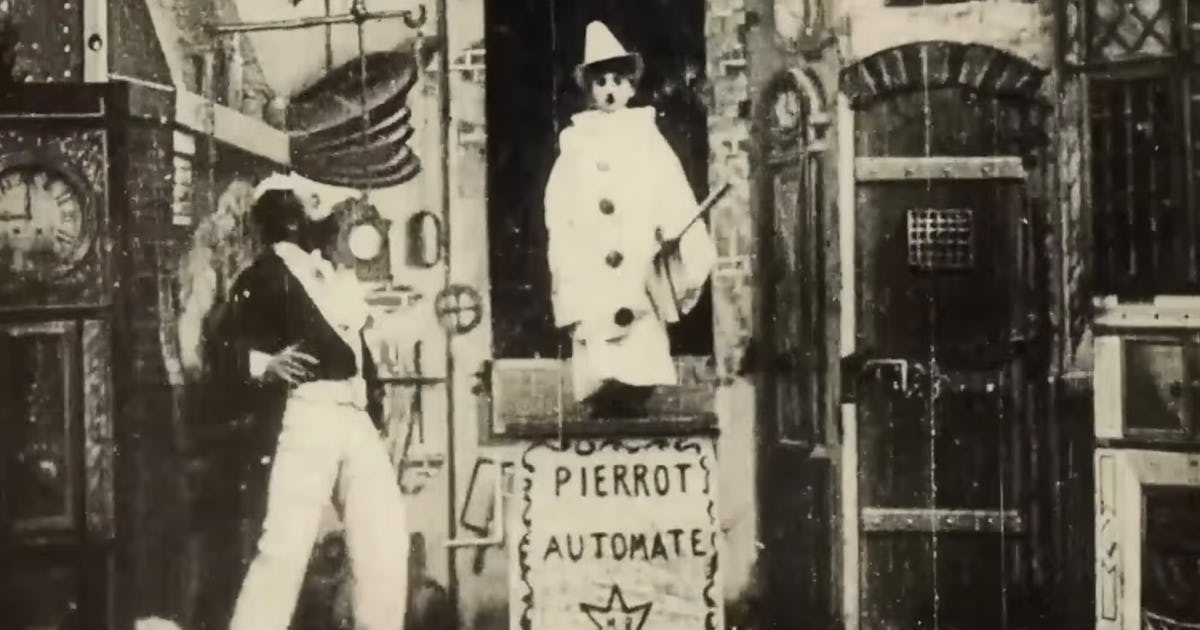
"Thanks to the U.S. Library of Congress, a movie long-considered the first piece of science fiction cinema - and more pertinently, long-considered lost - has now been found, restored, and stabilized: Georges Méliès's Gugusse et l'Automate, or Gugusse and the Automaton. You can watch it right now in 4K and see what might be the first ever robot cast in celluloid, and perhaps even the first on-screen parable about the dangers of technology, albeit in the form of a 45-second comedy short."
"He made over 500 silent shorts between 1895 and 1912, the most famous of which is arguably 1902's Le Voyage dans la Lune (or A Trip to the Moon). Unfortunately, the majority of his works were destroyed and remain wholly or partially lost. This rendered Gugusse the stuff of legend, often written about, but not seen in over a century."
"That all changed when archivists recently pulled apart congealed nitrate film strips donated to them in September. It was then that they realized they were looking at Méliès' famed 111th production. Chronologically, it's only the 15th to survive in full."
Georges Méliès's Gugusse and the Automaton, a 45-second silent film from the late 19th century, has been recovered and restored by the U.S. Library of Congress after being lost for over a century. The film is significant as it may contain the first robot ever depicted in cinema and represents an early parable about technology's dangers, presented as a comedy short. Méliès, a French filmmaker, inventor, and stage magician, created over 500 silent shorts between 1895 and 1912, but most were destroyed. Gugusse is only the 15th of his works to survive in full, making this discovery particularly valuable. The film depicts a static wide shot of a painted set where an inventor winds a life-size automaton, showcasing the craftsmanship and imagination characteristic of early cinema.
#film-restoration #early-cinema-history #georges-melies #science-fiction-cinema #lost-films-recovery
Read at Inverse
Unable to calculate read time
Collection
[
|
...
]