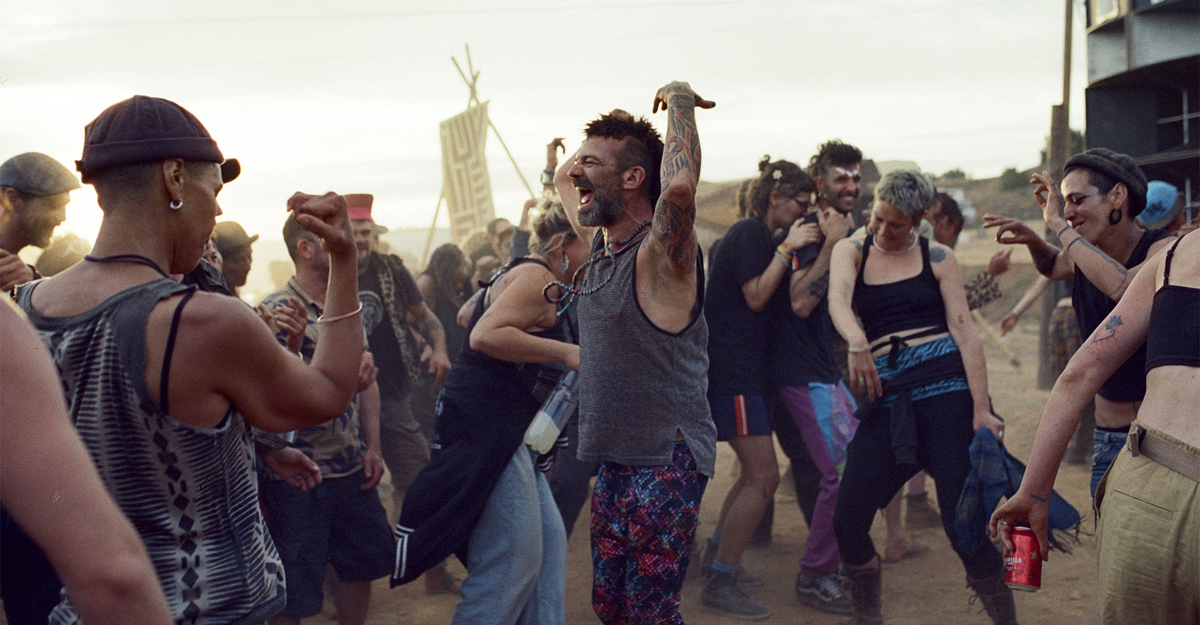
"Besides the music, the main appeal of raving is the feeling: of heads jolting to the sound of the beat, and sticky bodies rubbing up against one another as night turns into day. Lost in the groove, dancers escape from modern life-and decades after raving's emergence in the 1980s, people are still looking for existential meaning at the club."
"The possibilities and limitations of raving as an escape are the concern of Sirāt, a film by the French Spanish director Oliver Laxe, which imagines paradise as an illegal rave guarded by towering speakers in the middle of the Moroccan desert. Nominated for Best International Feature Film and Best Sound at the upcoming Academy Awards, Laxe's movie follows Luis, a middle-aged Spanish father searching for Mar, his missing daughter."
"It's a supportive act, one familiar to anyone who has seen dancers looking out for one another on the club floor, mirroring raving culture's origins in underground spaces built around found communities."
Raving offers dancers an escape from modern life through music, movement, and communion with others seeking existential meaning. The film Sirāt, directed by Oliver Laxe and nominated for Academy Awards, uses an illegal desert rave in Morocco as its setting to explore these themes. The protagonist Luis, a middle-aged Spanish father, travels with his young son to find his missing daughter Mar at the party. During their journey through the Moroccan desert, Luis encounters ravers and experiences both the challenges of the landscape and moments of community support, such as when ravers help tow his vehicle across a river. These interactions reflect raving culture's foundational values of mutual aid and found communities built in underground spaces.
Read at The Atlantic
Unable to calculate read time
Collection
[
|
...
]