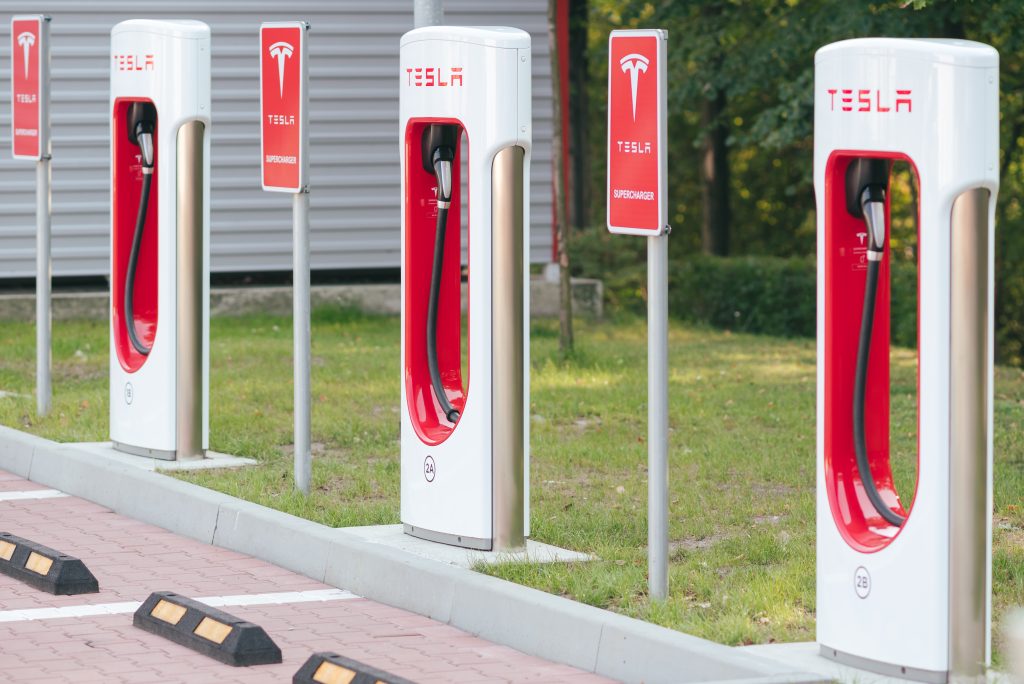
"Tesla argued that 'Kato discloses the Charging Control Limitation because the battery charge level increases in accordance with Kato's generated charging schedule when a user follows the schedule by manually plugging in their vehicle at each charging location.' But the PTAB found that the plain and ordinary meaning of the Charging Control Limitation 'excludes 'the user manually starting and stopping the charging.'"
"Charge Fusion owns U.S. Patent No. 10,998,753, titled 'Systems and Methods for Charging Electric Vehicles.' Tesla challenged the patent claims via inter partes review in 2022, and the Board instituted, but the PTAB ultimately held that Tesla had failed to show by a preponderance of the evidence that the claims were unpatentable."
Charge Fusion Technologies successfully defended U.S. Patent No. 10,998,753 at the Federal Circuit against Tesla's challenge. Tesla filed an inter partes review arguing the PTAB misconstrued two claim limitations: the Charging Schedule Limitation and the Charging Control Limitation. Tesla contended that the prior art reference Kato disclosed both limitations, including the Charging Control Limitation through manual user charging. However, the PTAB and Federal Circuit agreed that the Charging Control Limitation's plain meaning excludes manual user intervention and requires automatic operation. The CAFC panel, led by Judge Chen and joined by Judge Reyna, affirmed the PTAB's decision that Tesla failed to prove unpatentability, while Judge Dyk dissented.
#patent-litigation #electric-vehicle-charging #claim-construction #inter-partes-review #federal-circuit
Read at IPWatchdog.com | Patents & Intellectual Property Law
Unable to calculate read time
Collection
[
|
...
]