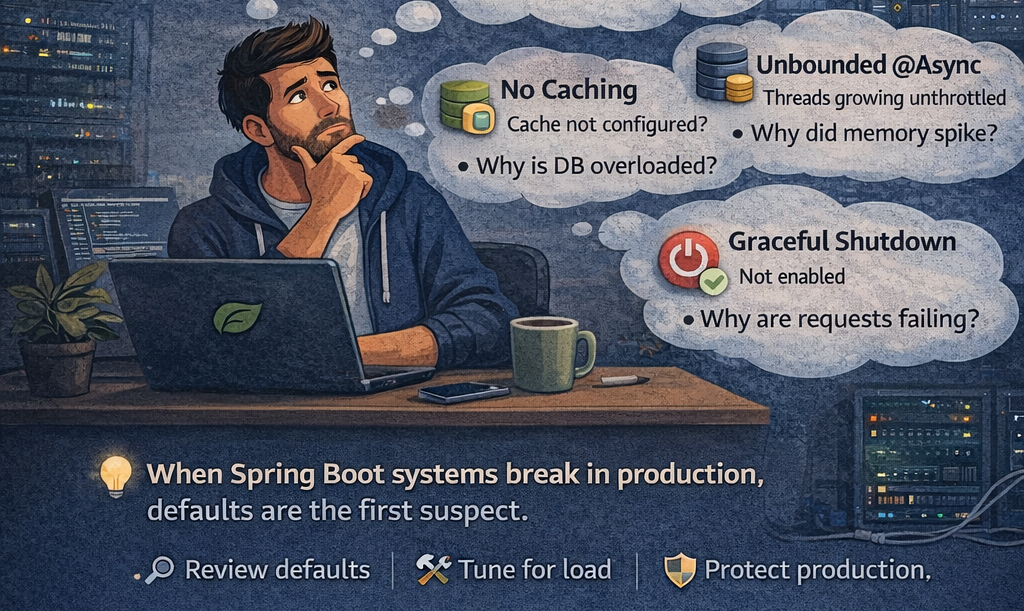
"Spring Boot is excellent at getting applications into production quickly. Most production outages don't happen because of bad code.They happen because Here are the Spring Boot defaults that quietly work in development - and come back to haunt you in production. defaults were shipped without being questioned. Threads block on DB / HTTP calls Requests queue even when CPU is free Latency spikes, not throughput"
"Felt YouUncomfortable, You're learning the Right Lessons. 1. Tomcat Thread Pool - 200 Threads Is Not "Scalable" ❌ Default server.tomcat.max-threads=200 🧠 What happens in prod ✅ What you should do server.tomcat.max-threads=80server.tomcat.accept-count=100 ✔ Fewer threads✔ Less context switching 2. HikariCP - 10 Connections Will Starve You ❌ Default"
Spring Boot defaults favor developer convenience but can cause production outages when threads block on I/O. Default Tomcat settings use 200 max threads, which can exhaust resources and increase context switching; reducing to about 80 threads and an accept-count around 100 reduces contention and context switching. Default HikariCP pool size of 10 connections can starve threads when requests perform blocking DB or HTTP calls. Blocked threads cause requests to queue even when CPU is idle, producing latency spikes rather than sustained throughput. Tune thread pools and connection pools to match blocking behavior and request latency characteristics; monitor and adjust under production load.
Read at Medium
Unable to calculate read time
Collection
[
|
...
]