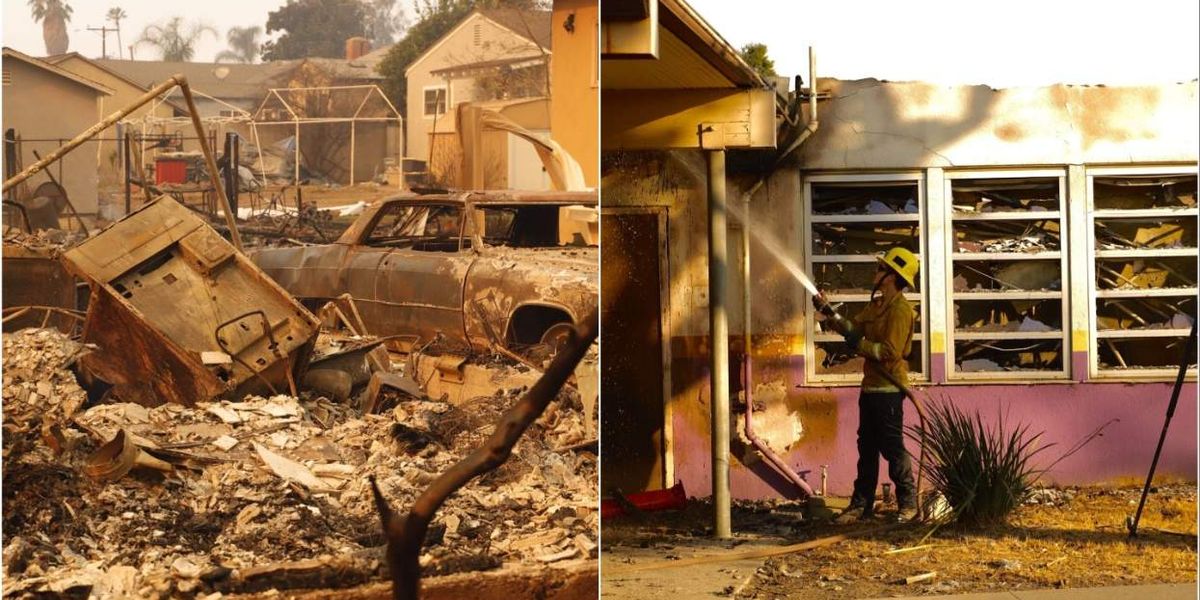
"LGBTQ+ residents also faced additional barriers during recovery due to discrimination and bias from service providers, survivors told report authors. "When the fires [were finally] under control, [LGBTQ+ residents] faced recovery services led by a federal administration hostile to LGBTQ+ people, and local service providers, including some faith-based service providers, that were not fully inclusive of their families," said lead author Brad Sears, distinguished senior scholar of law and policy at the Williams Institute."
"The key findings point to a major disparity in housing vulnerability - LGBTQ+ residents were more likely to be renters than they were to be homeowners. This disparity leads to an added layer of vulnerability in available housing and housing programs designed to help homeowners over renters. The survey also found that LGBTQ+ residents were three to four times more likely than non-LGBTQ+ residents to require legal assistance to navigate tenants' rights in resolving disputes with landlords."
The Williams Institute and the Los Angeles County Department of Public Health conducted a wildfire rapid needs assessment survey after the Eaton Canyon Fire and convened a listening session to gather survivor experiences. LGBTQ+ survivors entered the disaster with greater vulnerabilities and less immediate support from community organizations, friends, and family. Survivors reported discrimination and bias from some service providers during recovery, compounded by a federal administration hostile to LGBTQ+ people and locally noninclusive faith-based providers. LGBTQ+ residents were more likely to rent than own, creating housing instability and exclusion from homeowner-focused programs. LGBTQ+ residents were three to four times more likely to need legal assistance resolving tenants' rights disputes. Listening session participants described having claims taken less seriously once sexual orientation or gender identity became apparent.
Read at Advocate.com
Unable to calculate read time
Collection
[
|
...
]