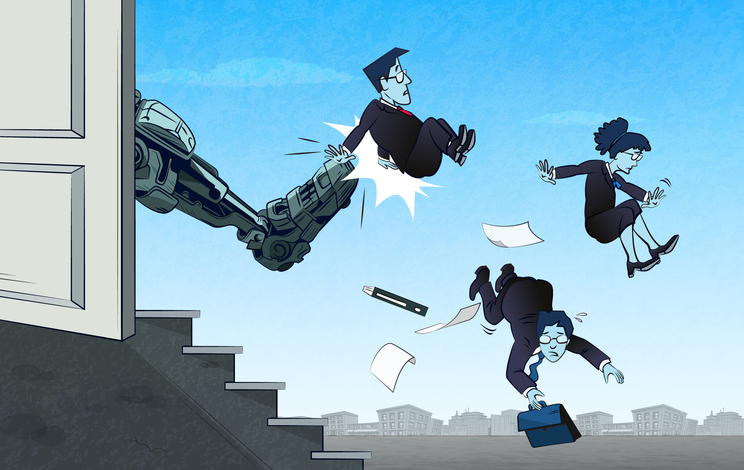
"AI will replace some tasks, reshape many roles, and change how legal services get delivered, but it is far less likely to replace the full lawyer function where judgment, strategy, persuasion, and accountability still drive value."
"The easy prediction is that AI will keep getting better at the parts of legal work that are structured, repeatable, text heavy, and pattern based. That includes first drafts, issue spotting, summarizing records, comparing contracts, organizing timelines, flagging anomalies, and generating alternative arguments."
"The work most at risk will be the work clients see as process, not judgment. If the task involves sorting, extracting, summarizing, classifying, redlining, or producing a solid first pass from known inputs, AI will continue to close ground."
Artificial intelligence is rapidly advancing through legal practice, handling drafting, contract review, research, document analysis, and client service. While some lawyers worry about replacement, AI will primarily displace structured, repetitive, text-heavy work like first drafts, issue spotting, contract comparison, and timeline organization. AI capabilities are advancing faster than anticipated, moving beyond junior-level tasks into more nuanced work. Tasks perceived as process-oriented rather than judgment-based face the highest displacement risk, affecting staffing models and billing structures. However, law fundamentally requires deciding what matters, meaning roles centered on judgment, strategy, persuasion, and accountability will remain valuable and difficult to automate.
#ai-in-legal-practice #legal-automation #lawyer-displacement-risk #legal-task-transformation #future-of-law-practice
Read at Above the Law
Unable to calculate read time
Collection
[
|
...
]