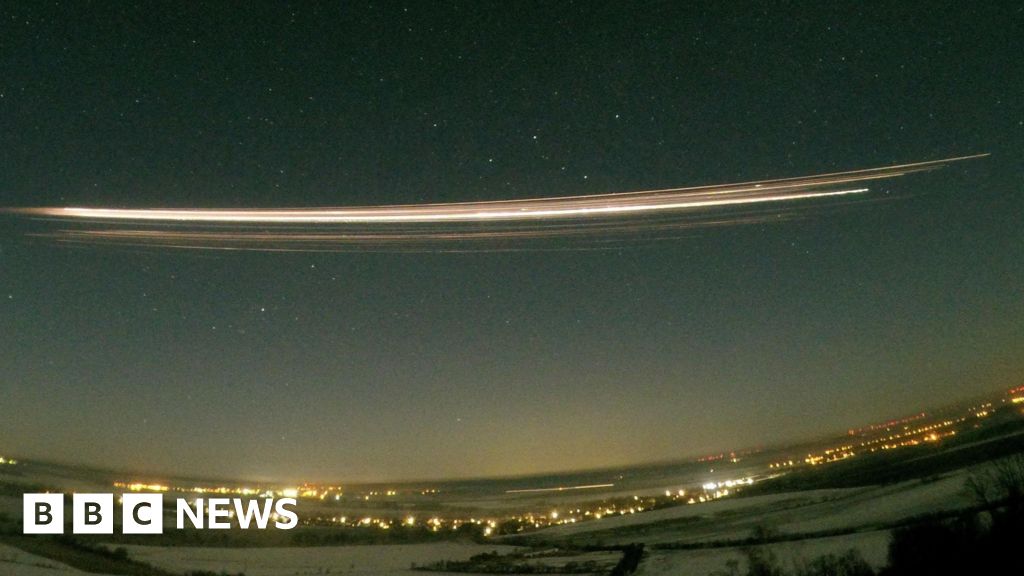
"When a SpaceX rocket failure set the skies aflame over western Europe last February, no-one was sure if the debris was also polluting our atmosphere. Now scientists are directly linking the uncontrolled rocket re-entry to a plume of lithium measured less than 100km above Earth. It is the first time researchers have drawn a direct link between a known piece of space debris crashing to Earth and pollution levels."
"The team fired a laser that detected metal atoms released from the rocket body made of aluminium-lithium. Gerd Baumgarten Working with Prof John Plane at the University of Leeds, they detected that the amount of lithium in the atmosphere at around 100km above Earth increased by a factor of 10. The atmosphere naturally gets about 50-80g daily from small meteors, Wing explains. "So, a single Falcon 9 rocket has about 30kg, so this is quite a lot more," he says."
A SpaceX Falcon 9 failed in flight and vaporised during uncontrolled re-entry over western Europe on 19 February 2025, scattering debris and fireballs. Laser measurements detected metal atoms from the aluminium-lithium rocket body and a tenfold increase in atmospheric lithium at around 100 km altitude. The atmosphere normally receives about 50–80 g of meteoric material daily, while a single Falcon 9 contains about 30 kg of lithium. Aluminium and aluminium oxides from such re-entries pose risks to the ozone layer. The long-term consequences for atmospheric composition remain unknown, and planned large-scale satellite launches could markedly increase this type of contamination.
Read at www.bbc.com
Unable to calculate read time
Collection
[
|
...
]