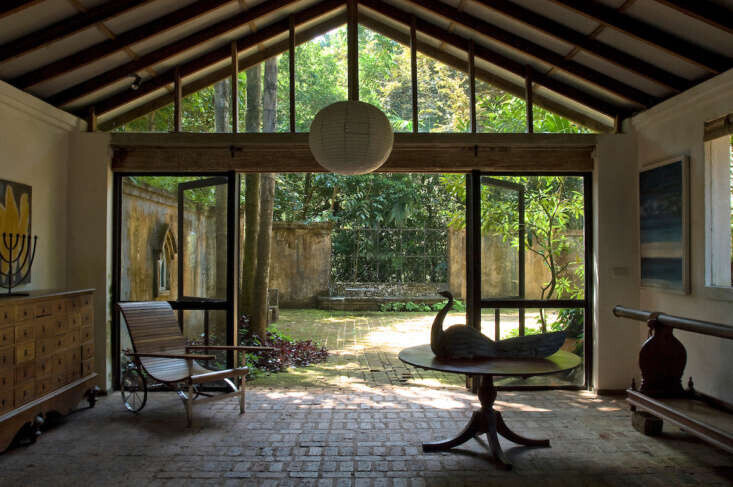
"Heritage is usually catalogued by what can be drawn, not by what changed temperature. In heat, buildings are learned first through skin, only later through sight. Generations learn, through their bodies, what works. Shade reduces glare and radiant heat. Air movement shifts perception by several degrees. Thick walls slow temperature swings."
"Adaptive comfort research, incorporated into standards like ASHRAE 55, shows that occupants in naturally ventilated buildings accept a wider temperature range than those in sealed, air-conditioned environments. When people can open a window, move into shade, or occupy a breezier threshold, they tolerate warmer air. A room feels cooler when the occupant can move, open, or shade, even when the air stays warm."
"Consider the historic pol houses of Ahmedabad's old city. Their narrow, shaded streets are not quaint accidents of medieval planning; they are calibrated urban canyons. The height-to-width ratios reduce direct solar penetration for most of the day, lowering radiant load at street level. Shared party walls reduce exposed surface area, limiting heat gain."
Thermal comfort shapes architectural memory and building types more than visual aesthetics. In hot climates, people remember where shade falls and which spaces breathed, not facade composition. Generations learn through bodily experience that shade reduces glare, air movement improves comfort, and thick walls moderate temperature swings. These repeated preferences stabilize into spatial configurations and building types. Modern building science validates what vernacular architecture practiced intuitively: occupants in naturally ventilated buildings accept wider temperature ranges than those in sealed environments. When people control windows, shade, and air movement, they tolerate warmer temperatures. Historic pol houses in Ahmedabad exemplify this principle, with calibrated urban canyon geometry and shared party walls reducing solar penetration and heat gain through passive design.
#vernacular-architecture #passive-cooling-design #thermal-comfort #building-science #climate-responsive-design
Read at ArchDaily
Unable to calculate read time
Collection
[
|
...
]