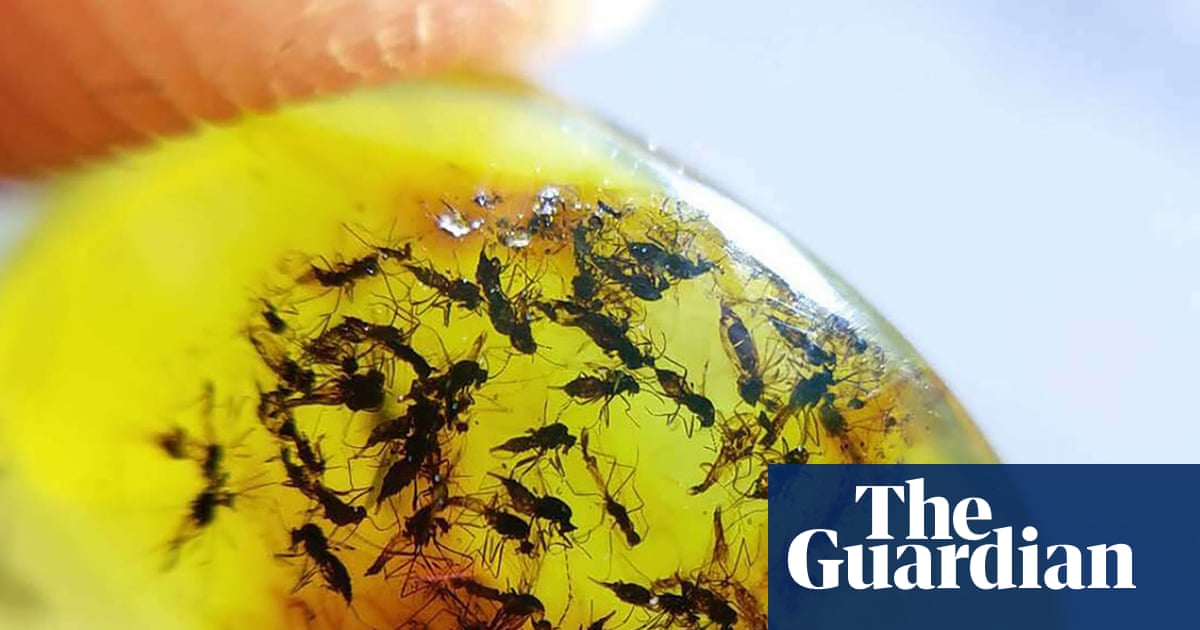
"When Borkent stops working, biting midges risk becoming an orphan group, a term that taxonomists give for a branch of the web of life that is no longer being studied. It is a pattern playing out across the field, he says. I am one of the last few standing. It's crisis all around. As the taxonomic community ages, we are not being replaced."
"Holding up a picture of a gnat trapped in amber from the time of the dinosaurs, the 72-year-old taxonomist explains that there are more than 6,000 ceratopogonidae species known to science. He has described and named more than 300 midges, mostly from his favourite family of flies. Some specialise in sucking blood from mammals, reptiles, other insects and even fish."
"You cannot get the grant money. There are almost no university or museum positions, he says. My science is dying. There's something about our relationship with nature that is so deeply intimate. I love biting midges because I know what their hearts look like."
Art Borkent, a 72-year-old taxonomist, has dedicated his career since 1989 to identifying and studying biting midges, describing over 300 species from the ceratopogonidae family. These insects, numbering over 6,000 known species with tens of thousands undiscovered, employ various feeding strategies including blood-sucking from mammals, reptiles, and fish. However, Borkent faces a critical problem: no successor will continue his work. The taxonomic field experiences a systemic crisis as researchers age without replacement, university and museum positions disappear, and grant funding becomes unavailable. This creates "orphan groups"—branches of life no longer studied by science. Borkent emphasizes that taxonomy itself is dying, with few researchers remaining to document Earth's biodiversity.
#taxonomy-crisis #biting-midges #scientific-succession #biodiversity-documentation #funding-and-academic-positions
Read at www.theguardian.com
Unable to calculate read time
Collection
[
|
...
]