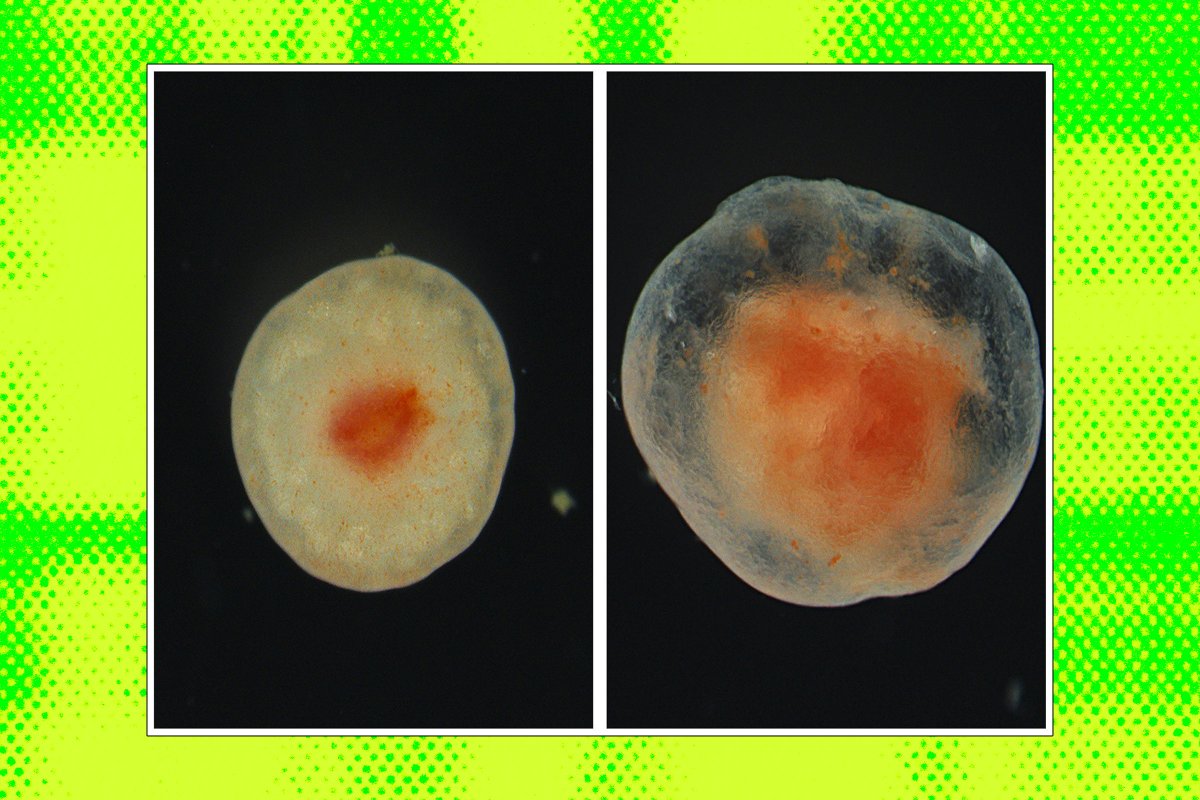
An amputated Psolus fabricii tissue sample persisted for three years in natural seawater while growing and repairing itself. The tissue endured an environment containing bacteria and other microbial organisms. Researchers observed immune activity and tissue reorganization, with cells diversifying and absorbing nutrients without external support. The persistence did not produce a complete new sea cucumber, and whether the tissue is truly alive in the traditional sense remains unclear. The specimen outlasted the researchers’ experiments, prompting publication of the findings.
"“This is naturally occurring tissue immortality,” study lead author Sara Jobson, a researcher at Memorial University of Newfoundland, told Ars Technica. “Having tissues that survive that easily is unheard of. We've never seen anything like this.”"
Read at Futurism
Unable to calculate read time
Collection
[
|
...
]