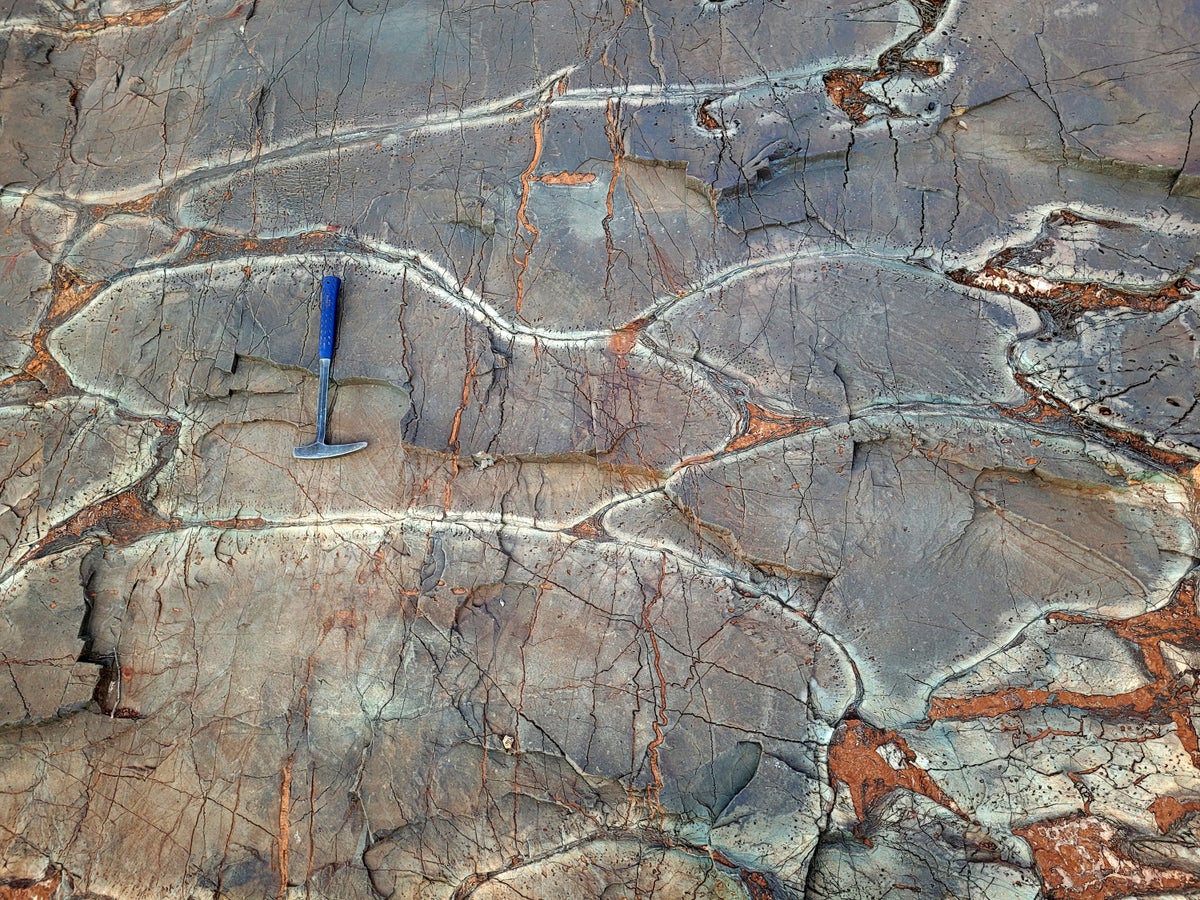
"Using magnetic traces from ancient pieces of Earth's crust, researchers found that a chunk of what is now Western Australia drifted toward the magnetic north pole over a few million years, as part of South Africa remained stationary. It's the earliest documented instance of relative plate motion by more than half a billion years, and it has implications for understanding early life on Earth and how the planet's tectonic activity began."
"Earth today is a jigsaw of giant chunks of crust that travel across the planet, smashing together like huge bumper cars, pushing up mountain ranges and melting back into magma along their edges. All this activity, called plate tectonics, seems to be unique in our solar system. It's believed that our rocky planet neighbors instead have a continuous, solid shell."
"No one knows, however, how or when plate tectonics got started on Earth in the first place. It's one of the most fundamental questions in Earth science, says study co-author Roger Fu, a Harvard University paleomagnetist. Geologists use various tools to investigate the state of Earth's crust over the eons, but the gold standard is evidence of relative motion: one piece of Earth's crust moving away from, or toward, another piece."
Researchers discovered compelling evidence that plate tectonics may have originated as early as 3.48 billion years ago by analyzing magnetic traces in ancient Earth's crust. A chunk of what is now Western Australia drifted toward the magnetic north pole over several million years while a portion of South Africa remained stationary. This represents the earliest documented instance of relative plate motion, surpassing previous records by more than 500 million years. Plate tectonics, unique to Earth in our solar system, involves giant crustal chunks traveling across the planet, creating mountain ranges and recycling material into magma. Understanding when and how this process began is fundamental to Earth science and has significant implications for comprehending early life development and planetary evolution.
Read at www.scientificamerican.com
Unable to calculate read time
Collection
[
|
...
]