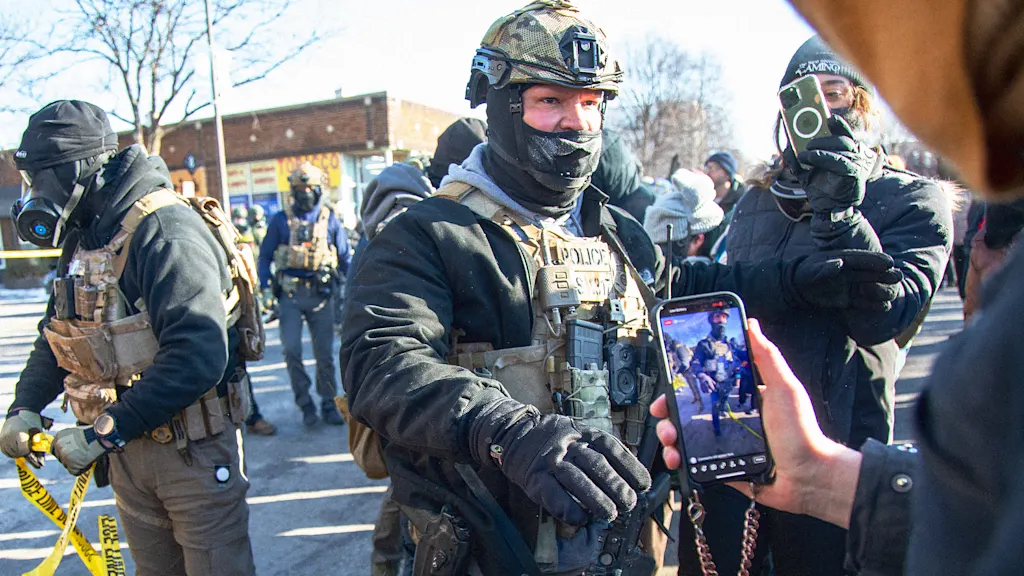
"It's more obvious than ever why recording encounters with federal agents matters: without bystander videos, it would be much harder to disprove the government's Orwellian lies about how Alex Pretti was killed last Saturday. But there are also risks when you pull out your phone to take a video at a protest or if you see an ICE agent abducting, say, a 5-year-old child. Here's what to know about how to protect your technology and yourself."
""It's really important to start with the fact that individuals have a First Amendment right to record police officers and law enforcement," says Maria Villegas Bravo, counsel at the nonprofit Electronic Privacy Information Center. "If you're lawfully allowed to be somewhere, you are legally allowed to record law enforcement in the course of their duty." Some ICE agents seem to have missed that in their training."
Recording encounters with federal agents can produce crucial bystander evidence that contradicts official falsehoods and documents how people are harmed. The First Amendment protects the right to record law enforcement when the recorder is lawfully present. Some federal agents have attempted to intimidate or target people who photograph or video them, including photographing license plates and labeling observers as threats. Phones contain extensive personal data and precise location history that can expose individuals if confiscated. Law enforcement generally needs a warrant before searching the contents of a seized phone. Individuals should weigh benefits against risks and take steps to protect devices and personal safety.
Read at Fast Company
Unable to calculate read time
Collection
[
|
...
]