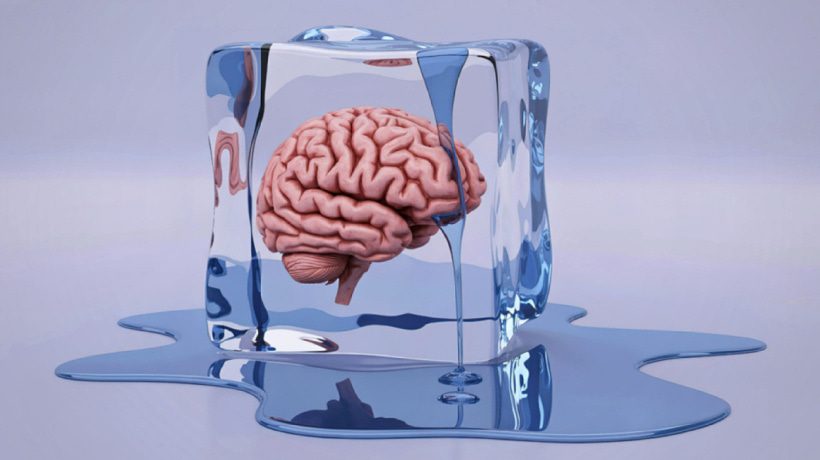
"As a learner, you have most likely experienced the moment when a pretty straightforward task suddenly feels insurmountable. The topic is familiar, the instructions are clear, and yet...crickets. No amount of pushing yourself to act seems to help. In learning environments, this is an extremely common experience. But do you know its underlying mechanisms? Surely you have heard of fight-or-flight, but have you heard of the freeze response that activates"
"The freeze response occurs when neither fighting nor fleeing seems possible. From a neurobiological perspective, it's a state of hypoarousal where the body becomes defensively immobile, controlled by the parasympathetic part of the nervous system. The amygdala, responsible for detecting threat, signals that danger is present, while the prefrontal cortex (the part of the brain responsible for reasoning, planning, and decision making) downregulates."
The freeze response induces hypoarousal, leaving learners defensively immobile and causing cognitive processes to slow or stall. The amygdala signals perceived danger while the prefrontal cortex downregulates, reducing reasoning, planning, and decision-making capacity. Cognitive, social, and emotional stressors can trigger freeze when neither fighting nor fleeing seems viable. Learners may report feeling numb, stuck, or blank and find familiar tasks suddenly insurmountable. Recognizing these neurobiological dynamics enables educators to design learning experiences that reduce threat signals, scaffold re-engagement, and provide support during and after freeze episodes.
Read at eLearning Industry
Unable to calculate read time
Collection
[
|
...
]